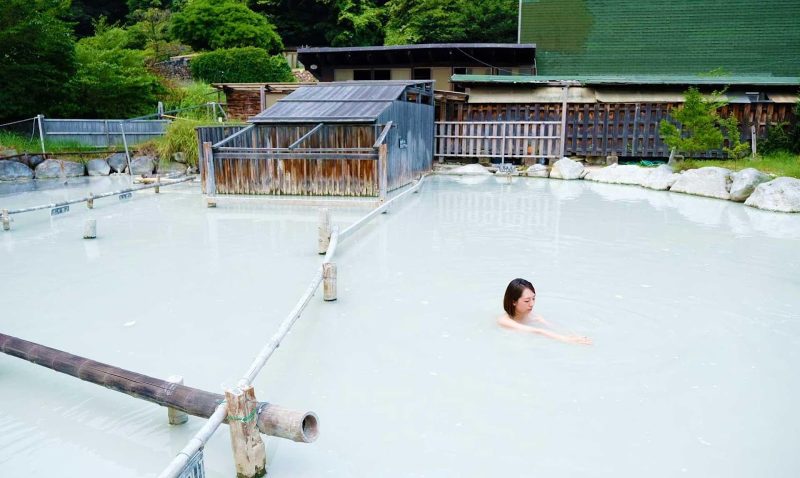
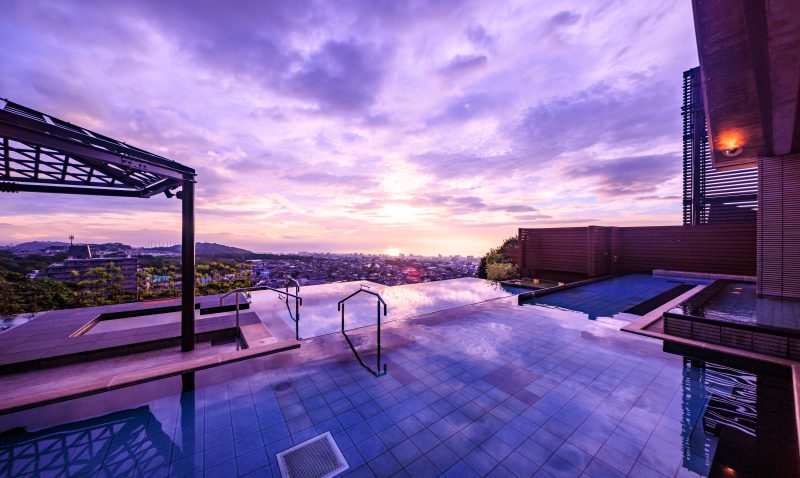
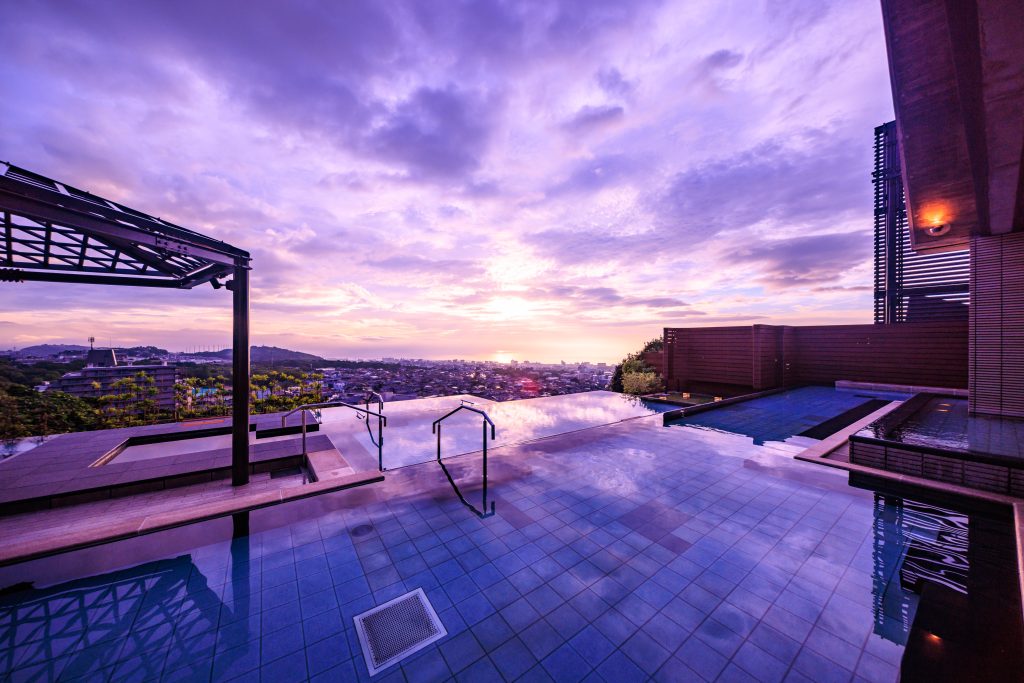
Since 1922, Hyotan Onsen in Beppu’s Kannawa district has filled its baths with 100°C spring water cooled by bamboo, without diluting it with tap water. In a single visit, you can enjoy waterfall baths, steam rooms, a sand bath you dig yourself and a lunch you steam yourself using hot spring steam. It’s open from 9:00 AM to 1:00 AM, about 20 to 25 minutes by bus from JR Beppu Station.
Why Hyotan Onsen Is Worth the Trip
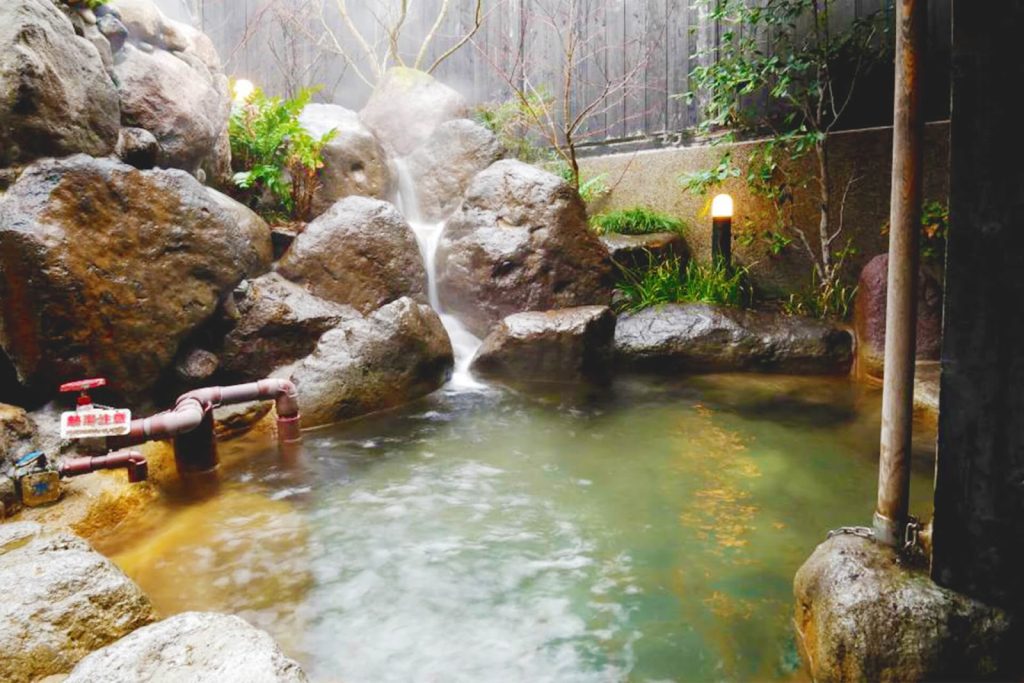
Hyotan Onsen is a day-use bathhouse in Kannawa, Beppu’s steamiest onsen district, where every bath uses 100% undiluted hot spring water with nothing added. The source comes out of the ground at 100.4°C, far too hot to bathe in.
Yumetake: The Bamboo Tower That Cools the Water
Many onsen with very hot water mix in cold tap water. Hyotan built its own cooling system instead, called yumetake (湯雨竹, “hot-water rain bamboo”). Spring water overflows a cypress-wood trough and drips down hanging bamboo branches, losing heat as it falls.
In just a few seconds, 100°C water drops to around 47°C (depending on the outside air temperature). The spring water is never diluted on its way to the baths. A small version stands beside the free foot bath at the entrance, so you can watch it work before you even pay.
The water is a weakly acidic sodium chloride spring, and all of it comes from Hyotan’s own on-site source.
A Hot Spring Dug for One Person
The story starts with a husband and wife. In 1922, founder Junsaku Kono dug for hot spring water to ease his wife Matsu’s rheumatism. The first bath he built was a rock bath in the shape of a gourd (hyotan in Japanese), and it is still in use in the women’s bath today.
Why a gourd? Junsaku admired the warlord Toyotomi Hideyoshi, whose battle standard was a cluster of gourds. In 1927, he went further and built Hyotan-kaku, an 18-meter-tall, seven-story observation tower shaped like a gourd. The tower no longer stands, but the gourd bath is still in use.

Kumahachi Aburaya, the businessman who promoted Beppu with the line “For mountains, Fuji; for sea, the Seto Inland Sea; for hot springs, Beppu,” is credited with launching Japan’s first sightseeing buses with women guides. The sightseeing routes in Beppu included Hyotan Onsen.
What It’s Like Today
The bathhouse is now run by Jin Tanaka, who keeps the doors open to every kind of visitor, tattooed guests included. When EnjoyOnsen interviewed him in 2020, his message to international travelers was short: “Please enjoy Hyotan Onsen, where things keep changing, but the things that matter stay the same.”

The Michelin Green Guide Japan awarded Hyotan Onsen three stars, and the facility describes itself as the only onsen in Japan to hold that rating. One entry ticket covers waterfall baths, steam rooms, open-air baths and more. If you want to compare it with Kannawa’s traditional steam-bath culture, read our guide to Kannawa Mushiyu, the herbal steam bath.
The Baths: Waterfalls, Steam and Sand
Hyotan Onsen has 8 types of baths in the men’s bathing area and 11 in the women’s, plus a sand bath and 14 private family baths. You buy one entry ticket at the ticket machine and pay extra for the sand bath or a private bath if you want. If it’s your first time in a Japanese bathhouse, our step-by-step onsen manners guide covers washing, towel etiquette and more.
Waterfall Baths and Open-Air Baths
The waterfall bath (takiyu) is what most visitors remember. Hot spring water drops about 3 meters onto your shoulders and back from 19 spouts on the men’s side and 8 on the women’s side. The water hits harder than you expect, so start at the edge.

| Men’s Bath (8 types) | Women’s Bath (11 types) |
|---|---|
| Open-air bath, hinoki (cypress) bath, waterfall bath, steam room, rock bath, gourd bath, walking bath, cold bath | Two types of open-air baths, sakazuki (cup-shaped) bath, rock bath, hinoki bath, cut-stone bath, steam room, waterfall bath, Yumemi bath, gourd bath, cooled hot spring bath |
The cold bath is worth trying even if you’re not a fan of it. It is spring water that’s been cooled down, not tap water, so it feels softer than you expect.
Steam Rooms
There are two steam rooms, one high-temperature and one low-temperature. Steam from the spring fills each room, and within a few minutes you’re dripping with sweat. Hyotan’s suggestion for a “detox” routine is to start with the sand bath, then move on to the steam room, with a dip in the cold bath in between.
The Sand Bath, Step by Step
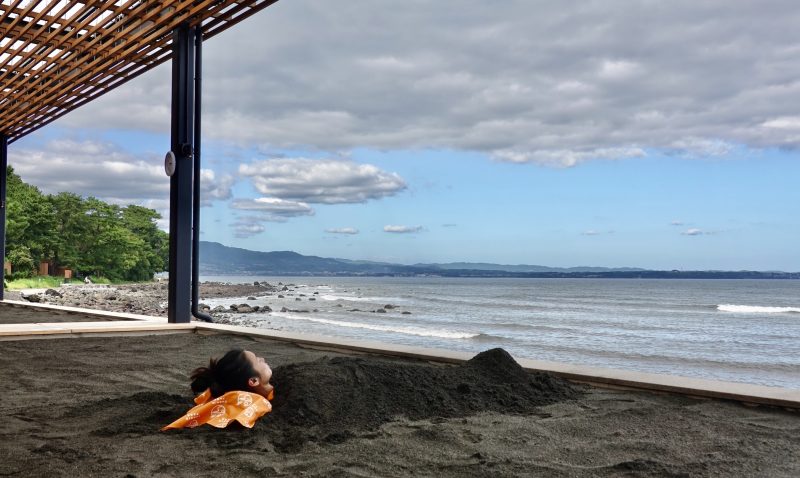
Hyotan’s sand bath (sunayu) is different from the beach-style sand baths elsewhere in Beppu. The sand is dry Beppu beach sand warmed by spring steam, not wet sand soaked in hot water. It feels light on the body and the temperature is milder, so you can lie in it longer.
The key difference: there are no staff to bury you. You dig in and cover yourself, or take turns burying each other. Families and couples usually laugh as they do it.
- At reception, buy the sand bath add-on. You get a rental yukata (cotton robe) and paper shorts.
- Change into the yukata and paper shorts in the dressing room.
- Pick a zone: medium or high temperature. First-timers should start in medium. The deeper you dig, the hotter the sand gets.
- Cover yourself with sand, or take turns covering each other. Doing it alone takes a little effort, so going with someone helps.
- Relax for as long as you like. There’s no time limit, but get out the moment you feel too hot.
- Rinse off all the sand in the shower before heading to the main baths. Women have a dedicated passage on the right, just inside the women’s entrance.
A few rules to know before you pay:
- The sand bath is only available with main-bath entry, not on its own
- You can’t combine it with a private family bath
- Sand bath reception closes at 10:30 PM, and the area closes at 11:00 PM
- The sand-bath yukata can’t be worn in the restaurant or rest areas
- Hyotan asks women not to use the sand bath during their period
Want to compare? Check out our guide to Beppu’s three sand bath experiences comparing Hyotan with Takegawara Onsen and SHONIN PARK, where attendants cover you with sand.
Private Family Baths: How to Book
Hyotan has 14 private baths (kazokuburo), each a separate little bathhouse with its own steam room and cold bath. The water is drained and refilled for every group, so you always get a fresh bath. They suit families with small kids and anyone who’d rather not bathe in front of strangers.
Reservations are required for all 14 private baths, and there are two ways to get one:
| Bath group | Rooms | How to book |
|---|---|---|
| Matsu-san no Yu-kokochi | 10 (8 indoor, 2 open-air) | By phone, starting one week before your visit: 0977-67-3010 |
| Makuyu Junsaku | 4 (all open-air) | By phone, starting one week before your visit: 0977-67-3010 |
Time limits and prices differ between weekdays and weekends/holidays, so check the official price page for the latest details. On weekends, rooms book up fast. If you can’t call in Japanese, ask your hotel front desk to call for you.
Some rooms are barrier-free. Guests with disabilities can get extra time, one caregiver gets in free, and staff can provide step stools, taller bath stools and mats on request. For more options around the city, see our list of the best private onsen in Beppu.
Jigoku-Mushi Lunch and Onsen Sweets
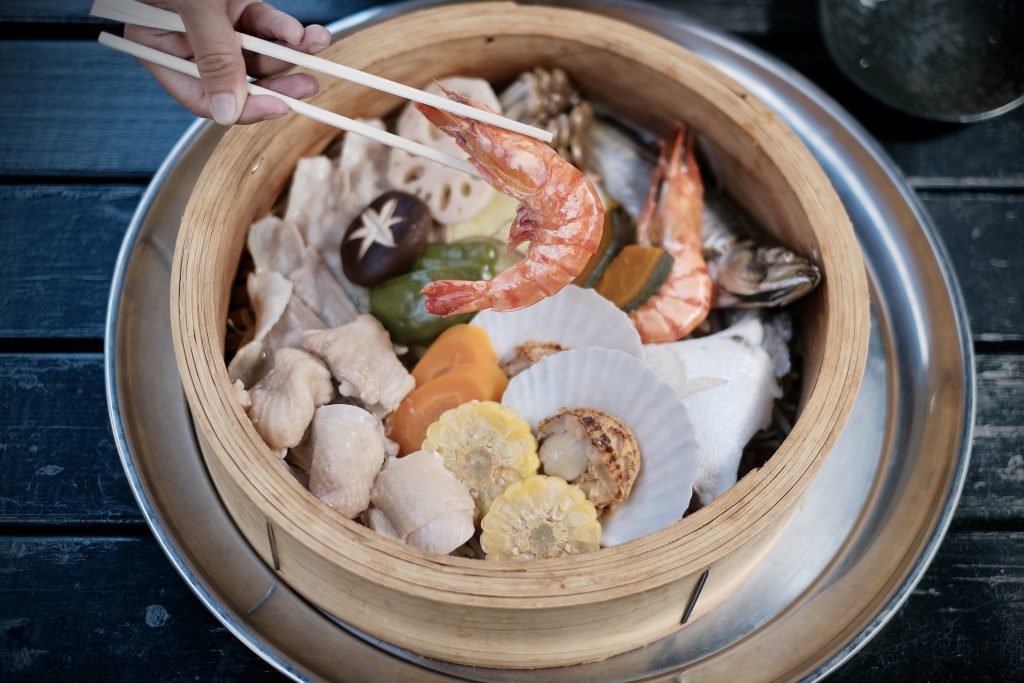
There are two places to eat here: a sit-down restaurant and a jigoku-mushi kitchen where you steam food yourself using hot spring steam. Jigoku-mushi (“hell steaming”) is Kannawa’s traditional way of cooking with onsen steam, and doing it here means you don’t have to leave the building between baths.
Steam Your Own Lunch
At the jigoku-mushi kitchen (蒸汎景), you order a set and steam the food yourself in pots heated by hot spring steam. Steam cooks vegetables, seafood and eggs quickly and without oil, and the aroma of the steaming food fills the whole dining area.

The Restaurant and What to Order
The restaurant, Onsen-meshi Yurari, serves set meals featuring local specialties. Opening hours, closing days and the menu may change, so check the official dining page for the latest information. Popular dishes include:
- Jigoku-mushi set meal: the best choice for first-timers
- Toriten set: Oita-style chicken tempura, a regional staple
- Jigoku-mushi butter chicken curry: for anyone who wants a break from Japanese flavors
- Kabosu udon (kabosu is a tart green citrus grown in Oita) and dango-jiru (hand-pulled flat noodles in miso soup): two Oita classics
Small Bites After the Bath
Don’t skip the sweets counter. The jigoku kamadashi pudding is steamed in-house every day, and steamed eggs in their shells and onsen soft-serve make an easy snack while you cool down in the courtyard. The courtyard also has a free drinking fountain for hot spring water and a steam inhalation corner.

Hours, Rules and Access from Beppu Station
Hyotan Onsen is open every day from 9:00 AM to 1:00 AM, and it takes about 20 to 25 minutes by bus from JR Beppu Station. Before you go, keep in mind that it’s cash only and towels aren’t included.
Practical Information
| Item | Details |
|---|---|
| Hours | 9:00 AM – 1:00 AM (main baths close at 12:00 AM) |
| Sand bath | Last admission at 10:30 PM; closes at 11:00 PM |
| Closed | Open daily; a few closures each year for maintenance (check the official notices) |
| Payment | Japanese yen cash only (ticket machine) |
| Towels | Bring your own, or buy/rent at reception |
| Amenities | Shampoo, conditioner, body soap, hair dryers |
| Tattoos | Allowed, no need to cover them |
| Wi-Fi | None |
| Address | 159-2 Kannawa, Beppu, Oita 874-0042 |
| Phone | 0977-66-0527 (private baths: 0977-67-3010) |
For prices, see the official price page. Fees vary by age: adults are 13 and up, and children 3 and under enter free. For other tattoo-friendly options, see our tattoo-friendly onsen map of Beppu. Details in this article may change, so check the official website for the latest information.
By Bus from JR Beppu Station
There are two ways to get to Hyotan Onsen by Kamenoi Bus from JR Beppu Station. For most visitors, the West Exit is more convenient, because buses come several times an hour.
| West Exit (easiest) | East Exit (closest stop to the onsen) | |
|---|---|---|
| Board at | Platform 3 | Platform 5 |
| Routes | 2, 5, 7 or 41 (bound for Kannawa) | 20 (via Beppu University) |
| Get off at | Kannawa, then walk about 6 minutes | Jigokubaru-Hyotan Onsen, then walk 3 minutes |
| Frequency | More frequent | Less frequent |
The ride takes about 15 to 25 minutes depending on the route. Getting back is the catch: buses to the station stop running early in the evening, so check the latest Kamenoi Bus timetable (in Japanese) before you go. A taxi is the simplest way home after an evening soak. New to Beppu? Start with our guide to getting to Beppu.
By Car
Hyotan is about 10 minutes by car from the Beppu IC expressway exit. It has free parking for about 80 cars. Groups arriving by bus must book a bus parking space.
Plan Your Visit: A Half-Day Itinerary for First-Timers
Allow three to four hours for Hyotan Onsen if you want the sand bath, a meal and a long soak. Two hours covers the main baths alone. Going in the right order and at the right time can help you avoid most of the wait.
The Best Order for Your First Visit
- Foot bath and yumetake at the entrance, free to use and a good spot for photos
- Shoe lockers, then the ticket machine: choose admission to the main baths, plus the sand bath if you want it
- Reception: hand over your ticket, get your locker key and sand-bath set
- Sand bath first, then shower off
- Main baths: waterfall bath, steam room, cold bath, open-air pools
- Courtyard break with drinking spring water and a pudding
- Lunch or dinner in your own clothes, not the sand-bath yukata (check the official site for restaurant hours)
When to Go
- Best: right when it opens at 9:00 AM, or late evening on a weekday (buses back to the station stop running early in the evening, so plan on a taxi)
- Busiest: weekend afternoons and Japanese holiday periods (Golden Week, mid-August, New Year), when meal reservations are paused
- Most atmospheric: winter mornings, when steam rises from the yumetake tower and drifts through the streets of Kannawa
Spend a Day in Kannawa
Hyotan sits by the Jigokubaru bus stop on the edge of Kannawa, the district that’s home to most of the Beppu Hells. A good plan: see the hells in the morning, have a jigoku-mushi lunch, then save Hyotan for the afternoon when your legs are tired. Our guide to the Beppu Hells will help you pick which ones to see.
FAQ: Hyotan Onsen
Are tattoos allowed at Hyotan Onsen?
Yes. Hyotan Onsen welcomes guests with tattoos in its main baths, and you don’t need to cover them. Beppu City’s official tourism site lists it as tattoo-friendly. That makes it one of the easiest choices for tattooed travelers who want a large public bath rather than a private bath. Rules can change, so it’s worth checking the city’s listing before you visit.
Do I need to book the private family baths?
Yes. All 14 private baths require reservations. The 10 rooms (Matsu-san no Yu-kokochi) accept phone bookings starting one week before your visit at 0977-67-3010. Reservations for the 4 open-air baths (Makuyu Junsaku) also open one week in advance. On weekends, call ahead or arrive close to opening time at 9:00 AM.
Can I use only the sand bath at Hyotan Onsen?
No. The sand bath is sold as an add-on to main-bath entry, so you must use both. You’ll get a rental yukata and paper shorts at reception. There’s no time limit for the sand bath. The last admission is at 10:30 PM, and you can’t use the sand bath and a private family bath during the same visit.
How do I get to Hyotan Onsen from Beppu Station?
The easiest way is from the West Exit of JR Beppu Station. Take Kamenoi Bus 2, 5, 7 or 41 from platform 3 to the Kannawa stop, then walk about 6 minutes. The West Exit has more buses. Route 20 from platform 5 at the East Exit stops at Jigokubaru-Hyotan Onsen, which is closer to the onsen, but runs less often. Check the latest timetable before you go.
Can I pay by credit card at Hyotan Onsen?
No. Hyotan Onsen takes cash only, in Japanese yen, at the ticket machine by the entrance. Bring enough for admission plus extras like the sand bath set, towels and food, since each is paid for separately. There’s no Wi-Fi in the building, so check prices on the official site before you leave your hotel.
Is Hyotan Onsen good for families with young children?
Yes, especially if you book a private bath. The women’s bathing area has a nursing room, a baby bed, baby bath chairs and showers reserved for families with children. Children 3 and under enter free, and kids’ rates apply up to age 12. The private baths let families bathe together, and the water is changed after every use.