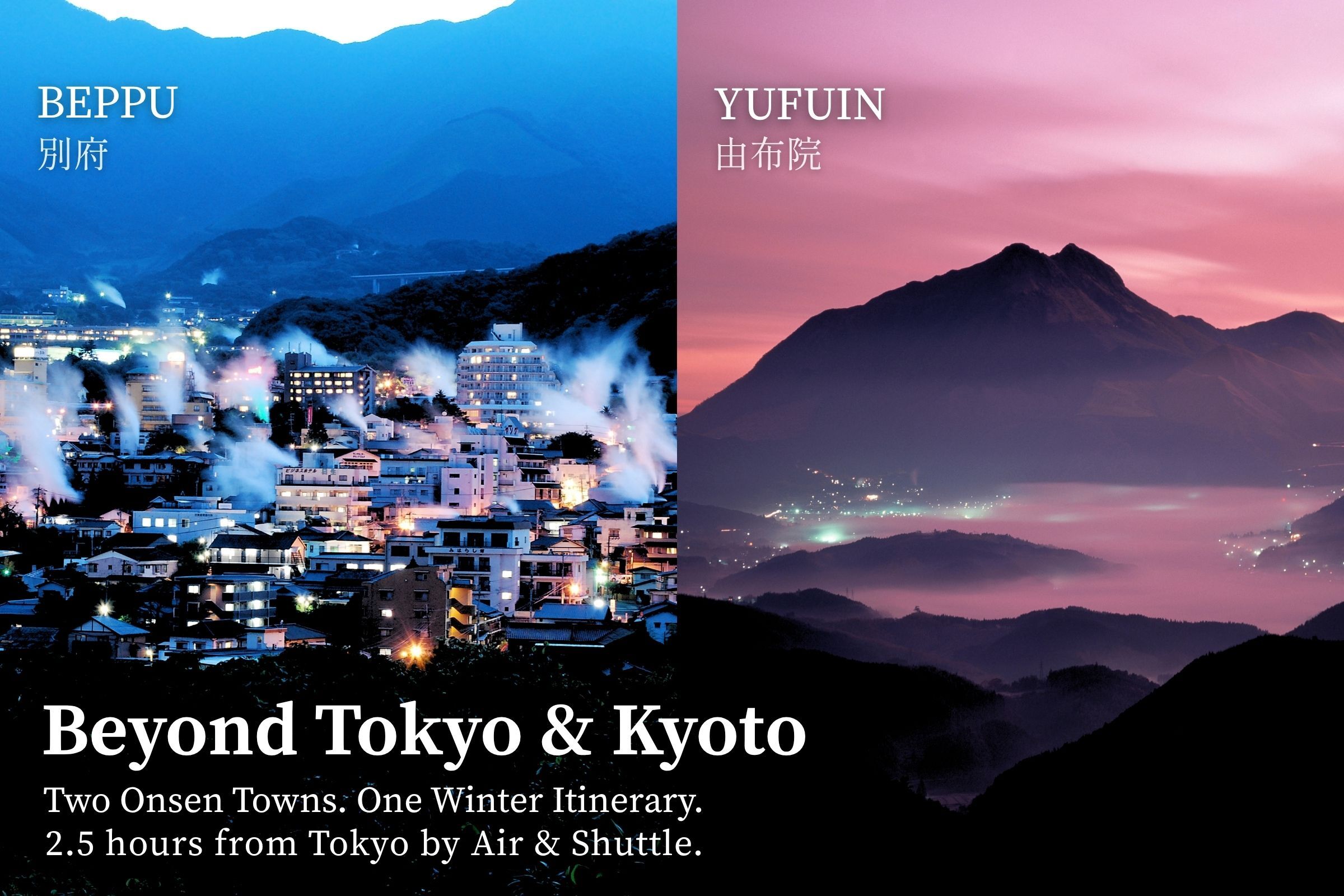
There are places that go beyond anything you might imagine when you hear the word onsen.
You’ve already done Tokyo and Kyoto, and now you want a deeper side of Japan. Or you’ve just enjoyed skiing in the mountains and want somewhere to let your body recover in hot water. Beppu and Yufuin answer both. The two towns sit in Oita Prefecture on the island of Kyushu, 30 minutes apart by car, and together they are home to nearly 4,000 hot spring sources (the points where onsen water reaches the surface), producing more hot spring water than anywhere else in Japan. Then winter comes, and the cold air transforms the landscape around these springs. The steam rising through the streets grows thicker, morning fog fills the Yufuin basin, and rime ice forms on the ridges overlooking Beppu Bay. Nowhere else in the world can you take in this scale, this quality, and these winter scenes on a single trip.
Why These Two Towns, Among Japan’s Many Onsen Destinations
A Scale and Variety No Other Onsen Destination Matches
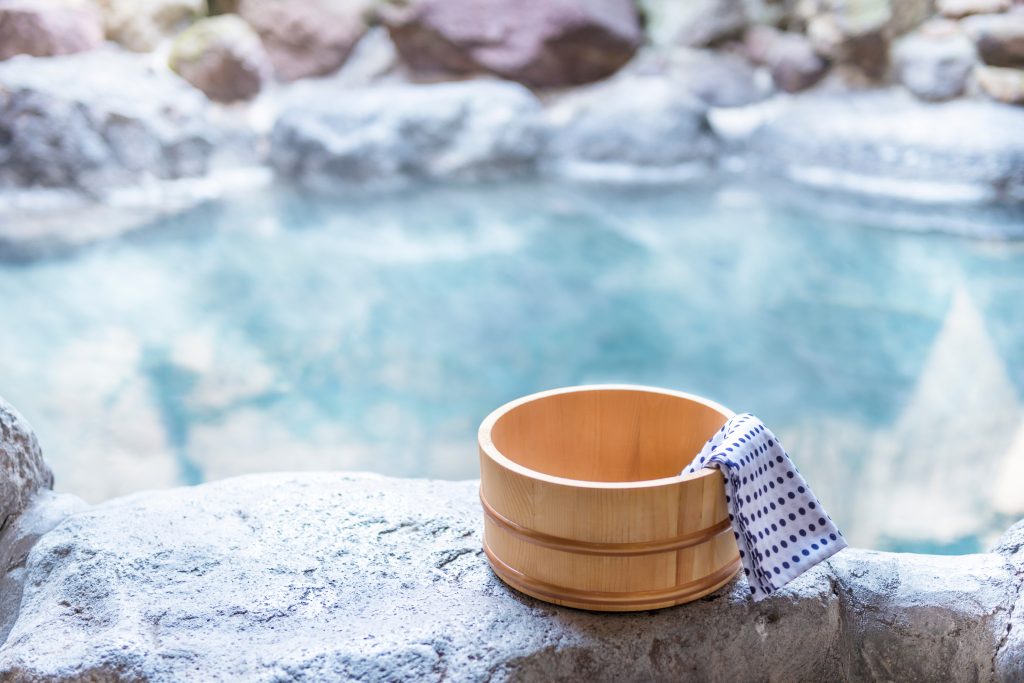
Beppu is known as a “department store of hot springs.” Within a single city, more than 2,800 sources are spread across eight main onsen districts, producing seven different types of hot spring water (the mineral makeup that gives each bath its character). No city in Japan has more sources, or more water rising from them. Stay in Beppu and you can bathe your way through completely different waters, all within a half-hour drive. At municipal public baths, admission starts at a few hundred yen (about US$2–3). Nowhere else in Japan puts this much variety within such easy reach.
Yufuin is a tranquil onsen resort nestled in a quiet basin at the foot of Mount Yufu. Its main street, Yunotsubo Kaido, is lined with galleries, cafes and craft shops, and hot springs, art and culture blend together here to create a distinctive atmosphere. On winter mornings, fog settles over the whole basin, and, amid the mist, ryokan (traditional Japanese inns) awarded Michelin Keys, the Michelin Guide’s distinction for outstanding places to stay, are scattered throughout the basin. Yufuin has long been chosen by travelers who want quiet and refinement. It remains one of Kyushu’s leading onsen resorts.
Two Different Experiences, One Efficient Trip
Beppu is a vibrant port city where hot springs are woven into daily life as essential infrastructure. Yufuin is a basin town where time moves slowly. Two towns with completely different characters, sitting 30 minutes apart by car. Three nights split between them will give you far more contrast than a full week in either one.
Two Towns, Two Faces
Beppu in Winter
The steam rising from Beppu’s hot springs — the yukemuri the city is known for — is thickest in winter, when the temperature difference between the hot springs and the outside air is greatest. NHK, Japan’s public broadcaster, once ranked Beppu’s steam-covered townscape second nationwide among Japanese landscapes worth preserving for the 21st century.
But the city’s appeal goes beyond what you can see. You can eat food cooked in onsen steam, be buried in onsen-heated sand, and walk among colorful hot springs. In Beppu, getting into the bath is only one of many ways to experience a hot spring.
Tattoos Welcome in the Bath: Over 100 Facilities in Beppu
At many onsen destinations in Japan, bathers with tattoos have long been turned away, which has made it difficult for international travelers to enjoy the onsen experience. Beppu took a different path. More than 100 tattoo-friendly bathing facilities have been confirmed within the city.
And here is where Beppu gets genuinely interesting. Upscale inns have private open-air baths in their rooms. Yet in the morning, guests still head out to the town’s baths, because in Beppu hot springs are not a resort amenity; they are how the town lives. For a few hundred yen, you get a taste of the town’s everyday life. The bath in your room is the evening hideaway. The bath in town is the afternoon’s adventure. And even with tattoos, you get to be part of it. That is the reason to choose Beppu. The current list is in our Beppu tattoo-friendly onsen guide.
The Hells of Beppu: Springs You Come to Look At, Not Bathe In
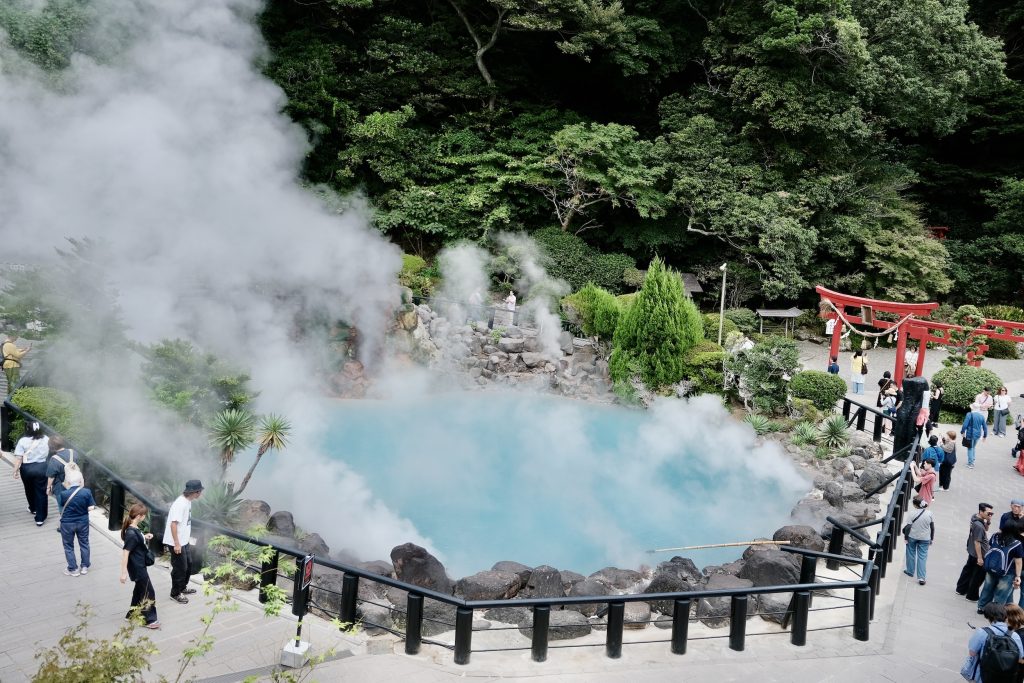
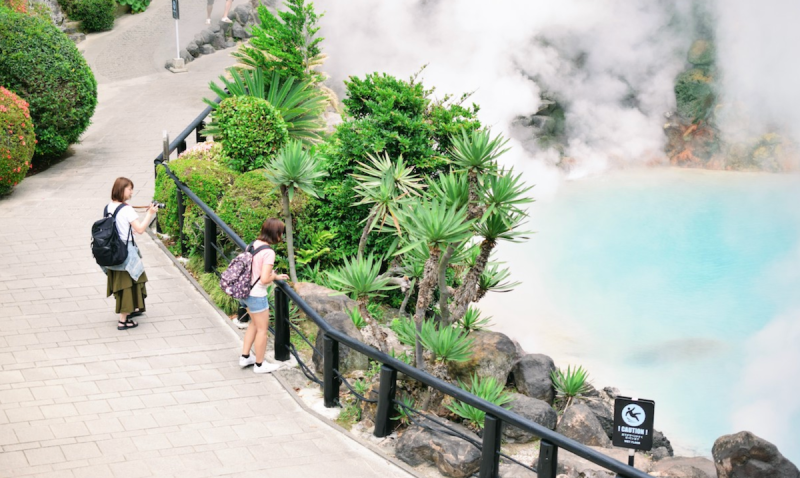
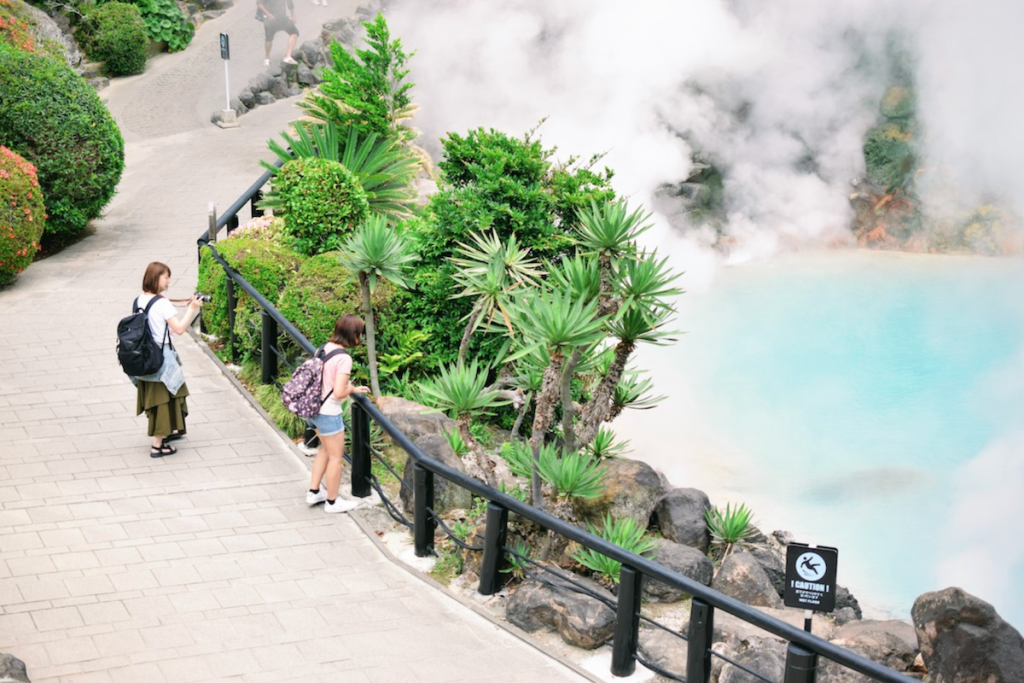
Beppu has a set of springs called jigoku, or “hells,” that are meant to be viewed rather than entered. The seven hells are divided between two areas, and each area can be covered on foot. Umi Jigoku is a cobalt-blue pool at 98°C (208°F). Chinoike Jigoku runs blood red from the iron in its water. Tatsumaki Jigoku is a geyser that erupts every 30 to 40 minutes.
Sand Baths (Sunayu): Getting Buried, the Beppu Way
You put on a yukata (a light cotton robe), lie down on the sand, and an attendant known as a sunakake-san shovels sand heated by the hot springs over you. The weight and the warmth of the sand slowly work through to the core of your body. It is not the same as soaking — Beppu has a bathing culture built around the experience of being buried. Winter, with cold air on your face, is when warm sand feels best. Beppu has several sand baths, including two with different characters.
Takegawara Onsen: A Sand Bath in the Middle of Town Since 1879
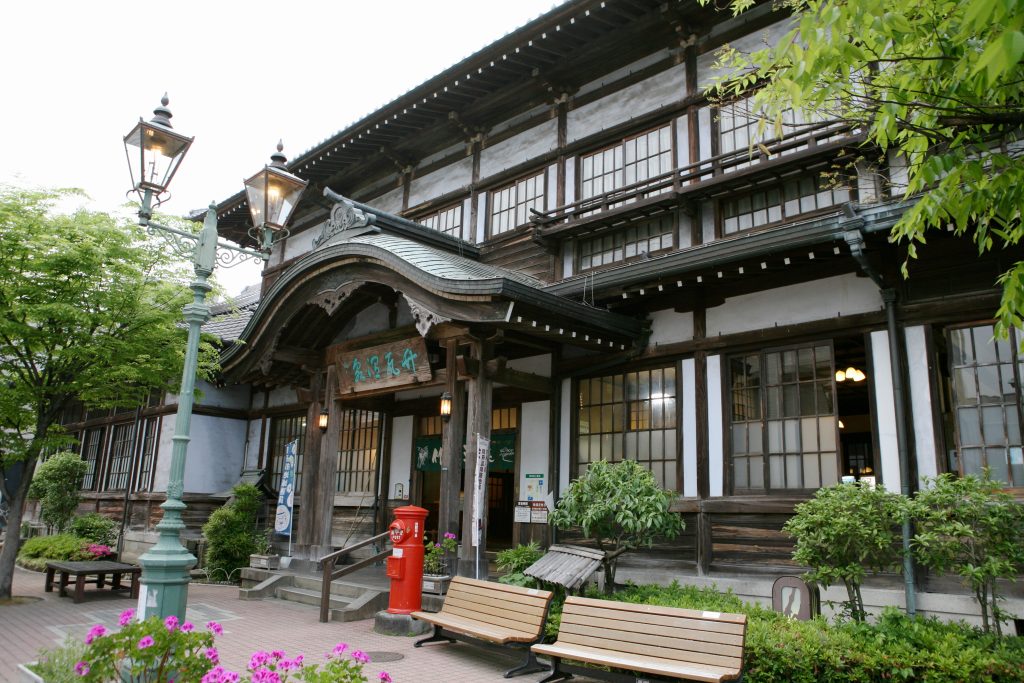
Takegawara Onsen is one of Beppu’s most iconic public baths. It began in 1879, when local residents built a bathhouse under a bamboo-shingled roof. The current building dates from 1938, and its stately exterior has become a symbol of Beppu onsen. The sand bath costs ¥1,500 (~US$10) and takes about 15 minutes. It starts filling up during the morning even on weekdays, so come early.
Beppu Beach Sand Bath (SHONIN PARK): Buried Beside Beppu Bay
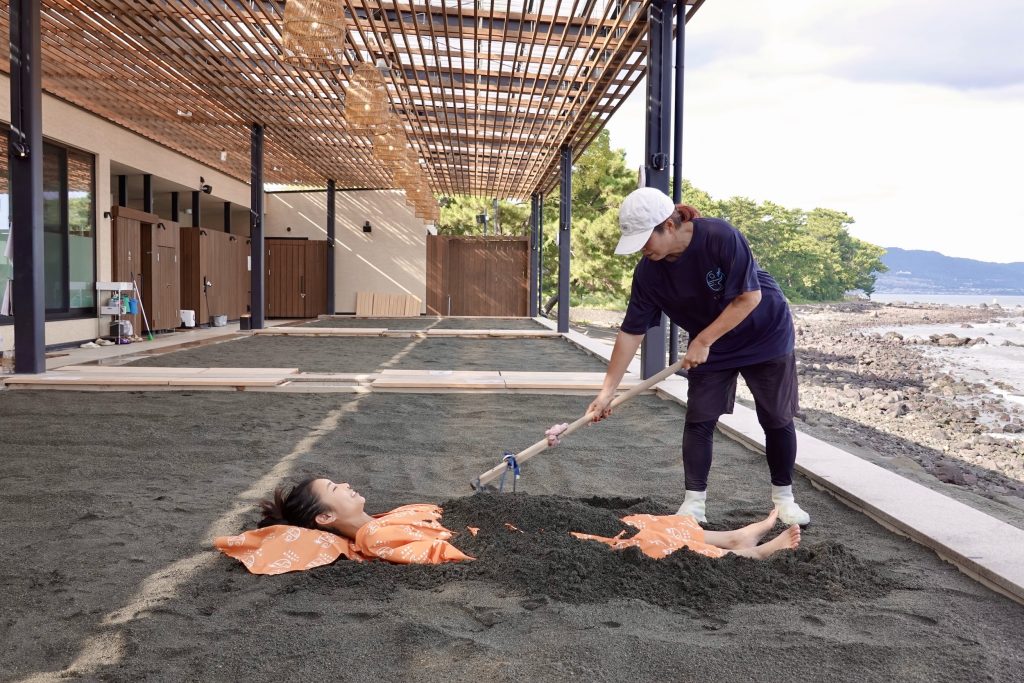
Beppu Beach Sand Bath, in Shoningahama Park (SHONIN PARK), is the only place in Beppu where you can take a sand bath by the sea. Sand bathing on this shore is thought to date back to the Heian period (794–1185). You lie in warm sand, listening to the waves with Beppu Bay stretching out before you. In winter, the contrast between the cold sea wind and the heat of the sand is especially striking. A 15-minute session, including the sand bath and the large indoor bath, costs ¥2,500 (~US$17) for adults. Booking in advance through the official website is recommended, and same-day reservations are also possible. Winter hours (November through March) are 8:00 AM – 6:00 PM (last admission 5:30 PM).
Mount Tsurumi: Rime Ice Above the Steaming City
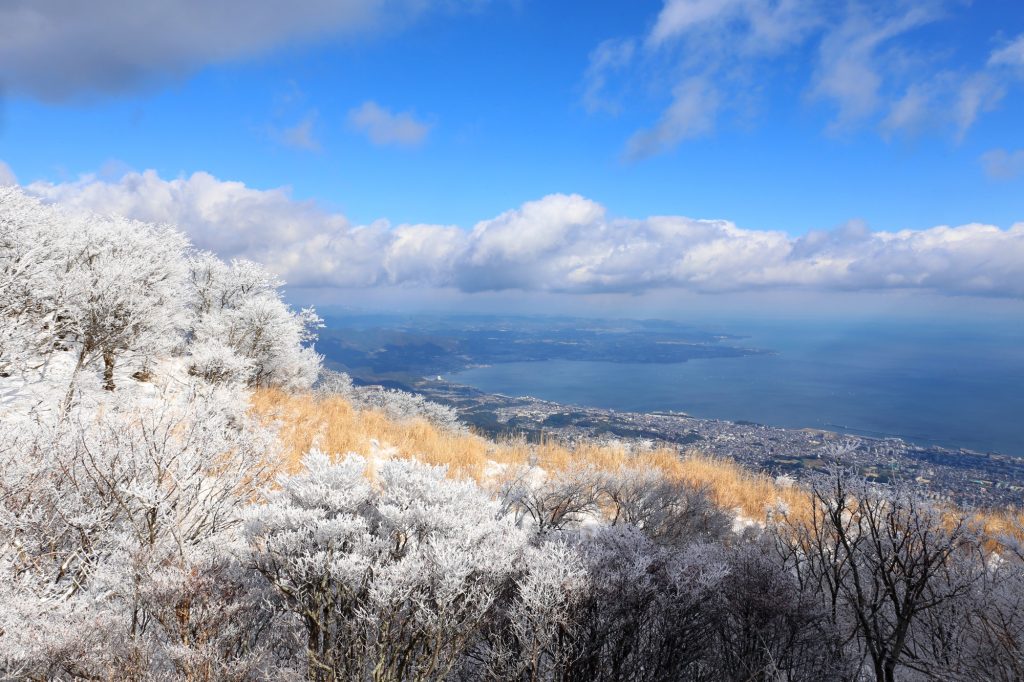
Mount Tsurumi (1,375 m / 4,511 ft) rises directly above the city of Beppu. On days when winter conditions are right, rime ice builds on the trees near the summit and covers the branches in white. The ropeway from the base to the summit takes about 10 minutes. Rime ice appears on roughly 40 days a year, concentrated in January and February. On January 1, a special early service runs to the summit for the year’s first sunrise, with steam rising from the city below.
Beppu Christmas Fantasia: Fireworks Over the Winter Bay
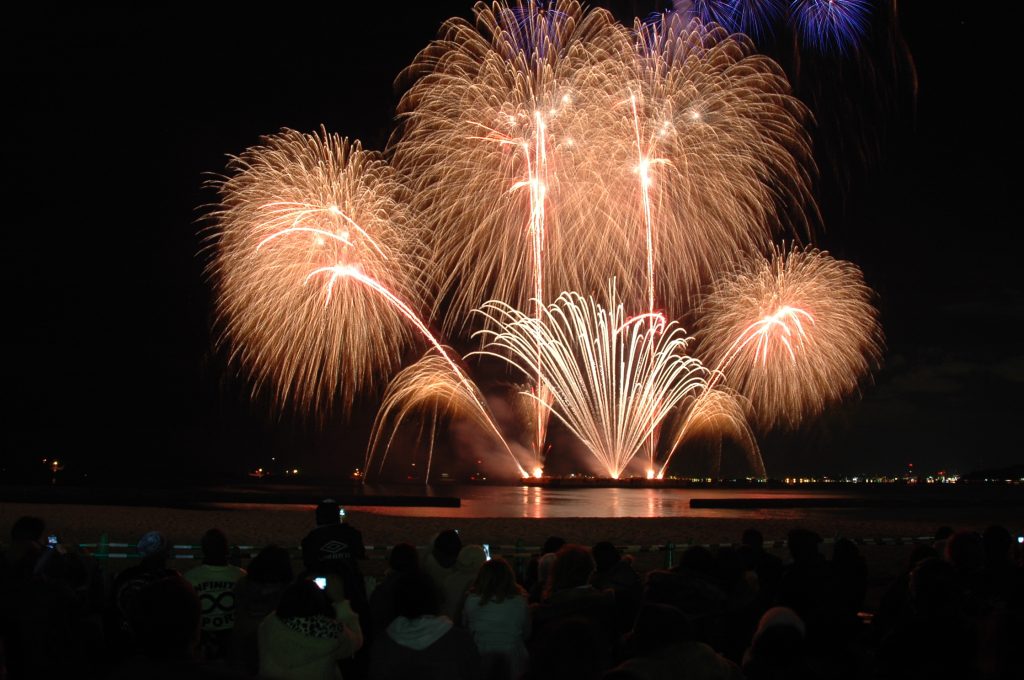
In late December, Beppu Christmas Fantasia closes out the city’s winter. Fireworks light up the night sky over the onsen city and the waters of Beppu Bay, adding another side to the steaming city’s winter. (Dates for 2026 will be announced soon.)
Yufuin in Winter
Yufuin sits in a basin about 500 m above sea level and ranks second in Japan for both the number of hot spring sources and the volume of hot spring water. The town has protected a landscape where rice fields and onsen inns exist side by side, and that choice is what gives the place its pace.
On early winter mornings, steam and fog mix in the cold air — a quiet kind of beauty you only get in this basin. There is no neon or nightlife district here. What there is instead is art, music and film. Soak, walk through a museum, stand in the quiet of a winter morning: what Yufuin offers cannot be measured by the quality of its water alone.
Mount Yufu: The “Bungo Fuji” Watching Over the Basin
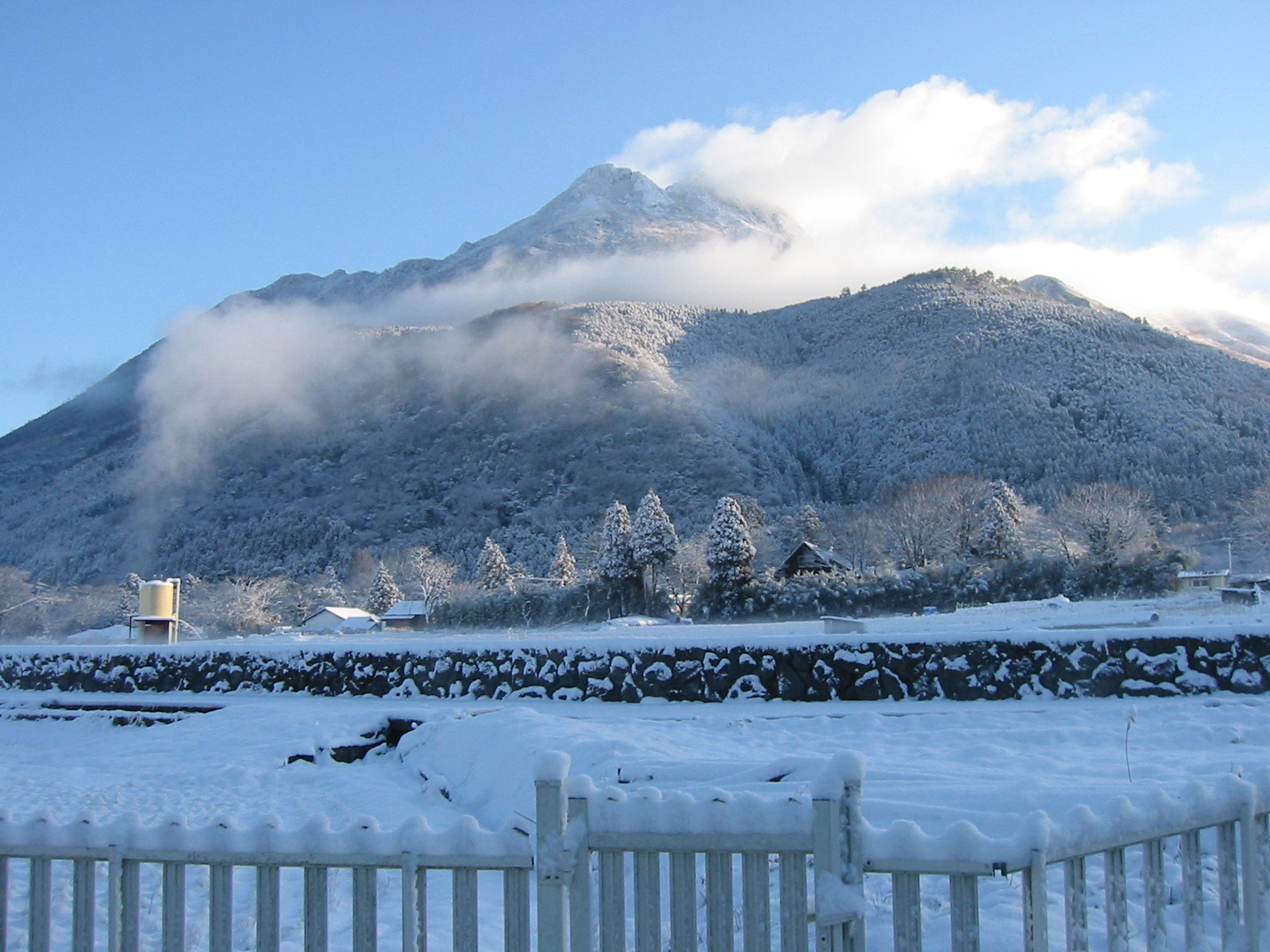
The centerpiece of the Yufuin landscape is Mount Yufu, 1,583 m (5,194 ft). Its twin peaks earned it the name Bungo Fuji, after the old name for this region, and wherever you walk in the basin, it is there when you look up. In winter, the summit is covered in snow, and on mornings when the fog lifts, a white Mount Yufu stands out against the blue sky. From the open-air bath at your inn, from a road between the fields, from a cafe window — time spent looking at this mountain is itself a reason to stay in Yufuin.
Lake Kinrin at Daybreak
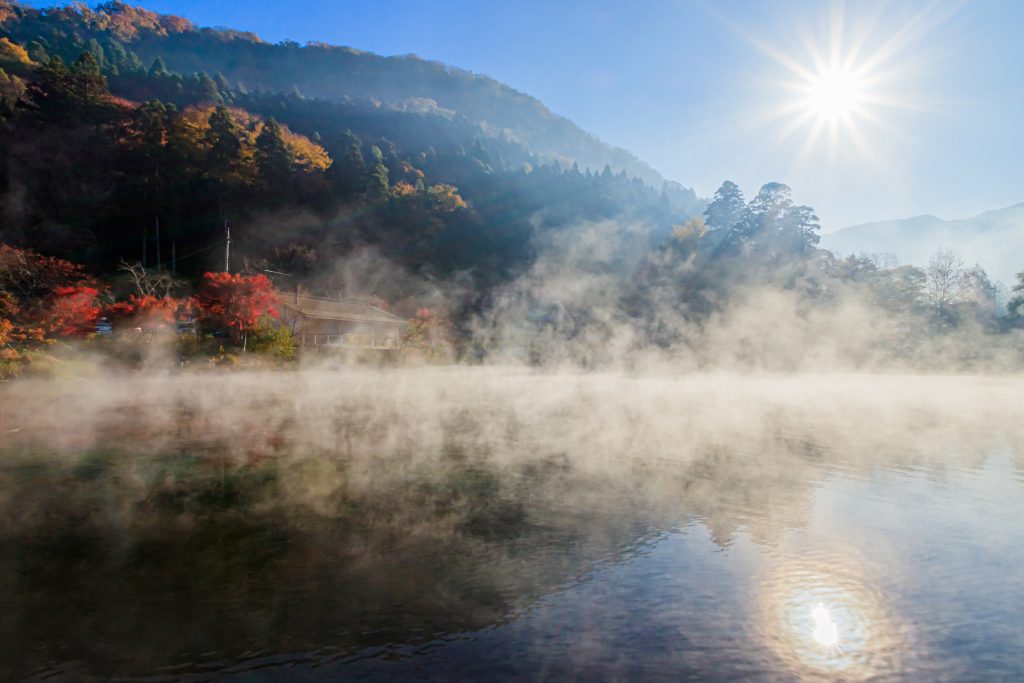
Lake Kinrin, “the lake of golden scales,” was named by a Meiji-era scholar who watched the scales of its fish turn gold in the evening sun. Both hot spring water and spring water flow in from the lakebed, so the water stays warm all year. On cold mornings from autumn into winter, steam lifts off the surface, and it feeds the fog that fills the whole Yufuin basin. That fog does not appear every morning — the colder the morning, the thicker it gets. Which is exactly why so many travelers stay the night in Yufuin and slip out of the inn before dawn.
Yunotsubo Street: Quiet in the Fog, Busy by Afternoon
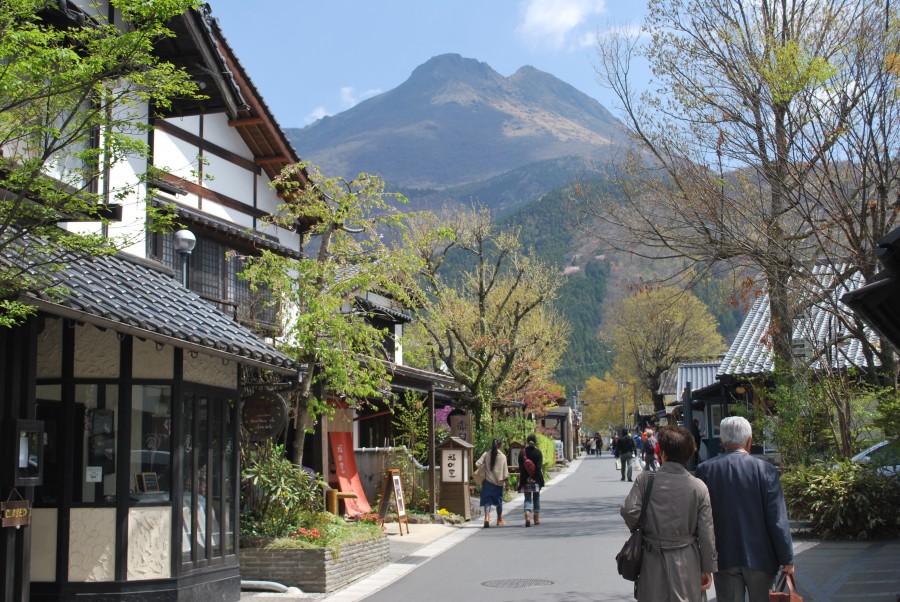
Yunotsubo Street runs from Yufuin Station toward Lake Kinrin and packs much of what Yufuin has to offer into one street: craft shops, galleries, and shops selling sweets and light meals made with local ingredients, with the crowds to match. The version worth knowing is the morning one, which only overnight guests see. Before the shops open, the street in the fog is startlingly quiet, with a snow-capped Mount Yufu standing straight ahead. Evening for the bath and dinner at your inn, morning for a walk in the fog, afternoon for the shops — staying in Yufuin is what lets you find all three versions of this street.
COMICO ART MUSEUM YUFUIN
COMICO ART MUSEUM YUFUIN was designed by Kengo Kuma, the architect behind Tokyo’s Olympic Stadium, around the idea of a village. Walls of charred black cedar let it settle into the Yufuin landscape. Inside is a long-term display of 46 works by seven of Japan’s leading contemporary artists, among them Yayoi Kusama, Yoshitomo Nara and Takashi Murakami. You take in world-class art here surrounded by nature, with Mount Yufu in view. That a contemporary art museum has taken root in an onsen town speaks to the depth of Yufuin. Open Thursday through Monday (closed Tuesday and Wednesday).
How to Spend Your Time in the Two Towns
The Baths
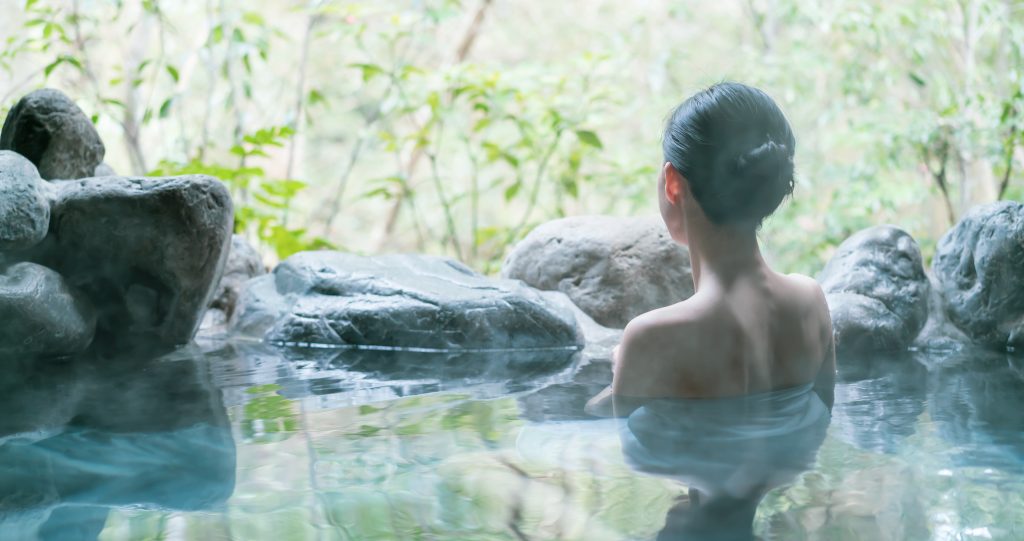
If you are coming to Beppu and Yufuin, build the trip around the hot springs. Winter is the season when you can both see and feel the water: white steam climbing through cold air. In Beppu, the steam over the whole city grows heavier. In Yufuin, the quiet hour in an open-air bath with Mount Yufu in front of you runs deeper. Many Yufuin inns have private baths you can reserve, or open-air baths in the room, so you can take your time in the bath, without having to worry about anyone else. Two areas with different hot spring characteristics and different lodging styles, 30 minutes apart by car — that pairing is rare anywhere in the world.
If this is your first onsen, there is very little to learn. Before getting into a shared bath, always rinse off with kake-yu (pouring water over yourself). Keep your towel out of the water. That is essentially all of it. English is not always spoken at the municipal baths and sand baths, but the routine is simple and you will pick it up by watching. In winter the temperature gap between the changing room and the air outside is large, so drink water regularly to avoid getting light-headed. Our onsen etiquette guide covers the details.
Food
Jigoku-mushi in Kannawa, the District Under Steam
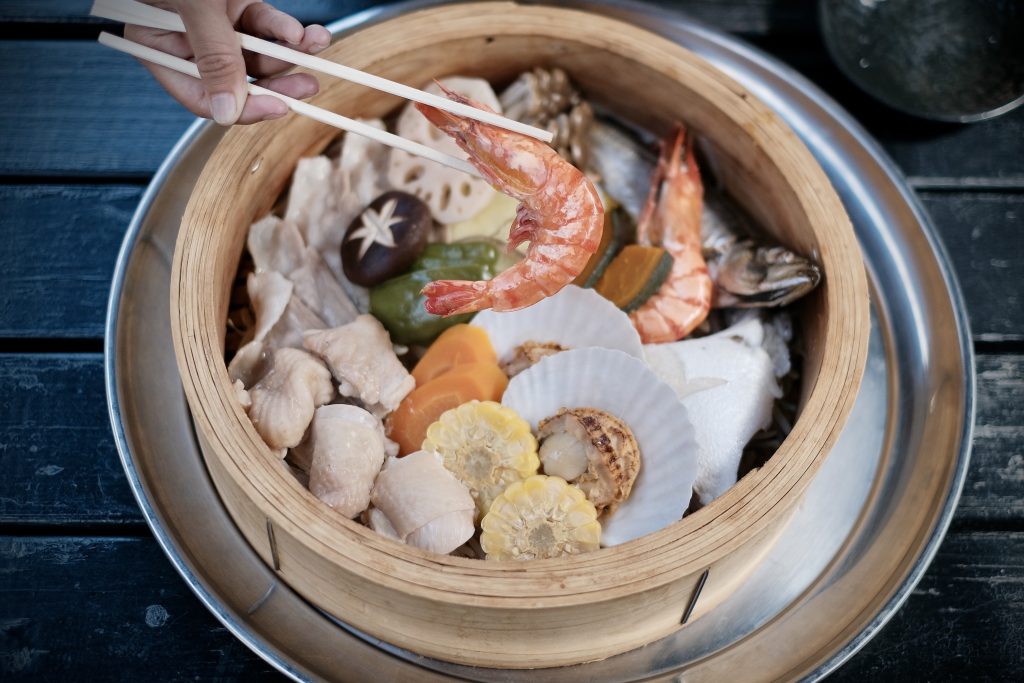
Kannawa has the most hot spring sources of Beppu’s eight onsen districts, and steam rises from all over the neighborhood — it is the most Beppu-like part of Beppu. Jigoku-mushi, a cooking method dating to the Edo period (1603–1868), steams food over roughly 100°C (212°F) hot spring vapor. No added oil: the flavor of the ingredient itself, enhanced by the minerals in the spring water. Here you do not just bathe in the hot springs — you eat them. See our jigoku-mushi food guide for details, including recommended places to try it.
Bungo Beef: A Century of Wagyu
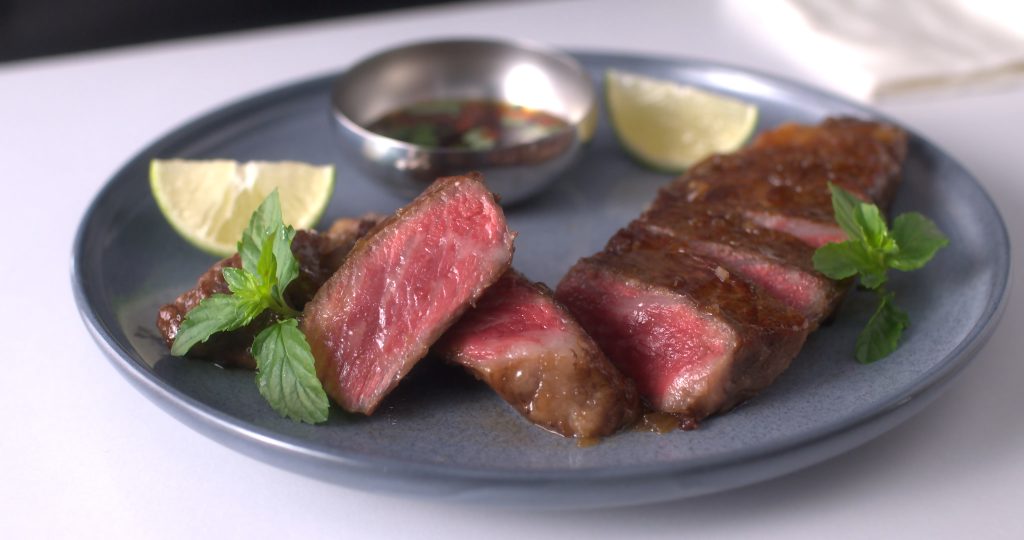
Bungo beef is a wagyu brand raised in the rich natural surroundings of Oita. Its fine marbling gives it melt-in-your-mouth tenderness and rich flavor that are well regarded across Japan. You’ll find it at restaurants throughout both areas, and on the dinner menu at your inn, where you can take your time with it.
Winter Only: Fugu and Seki Mackerel
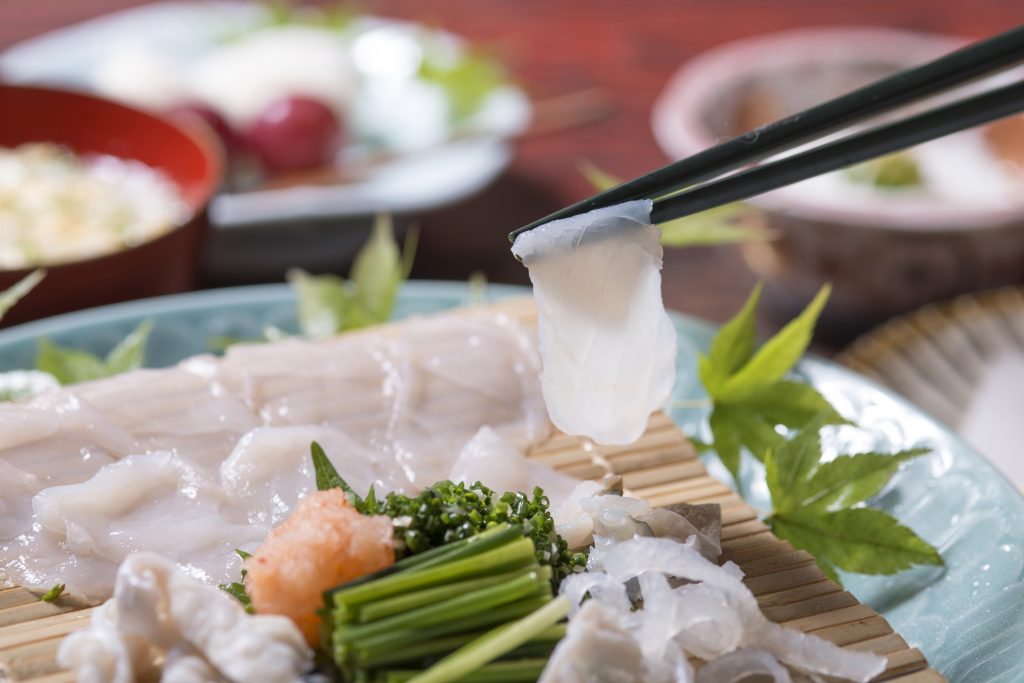
Winter is when Oita’s seafood comes into its own. Wild torafugu (tiger pufferfish, November through March) is caught in the Bungo Channel, the fast-current strait between Kyushu and Shikoku, and is among the most prized fish in Japan. Only chefs certified by the Governor of Oita Prefecture may serve it, and many ryokan build it into their winter kaiseki (multi-course) menus. Seki mackerel (December through March), from the same channel, is handled to sashimi standard from the moment it comes out of the water. You can eat it at specialist restaurants in Beppu and in the kaiseki courses at Yufuin’s high-end inns. After a soak, the table is set with seafood at its seasonal best.
Bad Weather Doesn’t Break the Trip
Rainy or cloudy mornings are no reason to worry. Take in the art at COMICO ART MUSEUM, bury yourself in the sand at Takegawara Onsen, and enjoy jigoku-mushi in Kannawa. Even indoors, you can enjoy everything this onsen town has to offer.
Where to Stay: Six Selected Places
The two areas offer a wide range of places to stay, each shaped by the character of its setting: refined, Michelin-recognized properties at one end, long-established inns rooted in toji (the old practice of staying on for a course of hot spring treatment) at the other. And at a property with a private open-air bath in the room, travelers with tattoos can use the hot springs without a second thought.
Staying in Beppu
1. AMANE RESORT SEIKAI
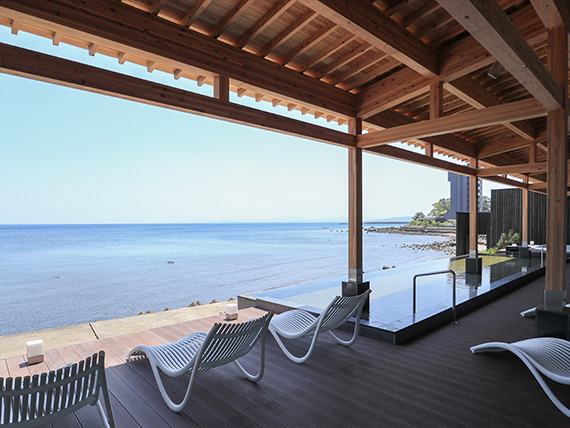
Every room has a private open-air bath looking out over Beppu Bay. Three restaurants. Listed in the Michelin Guide, with a track record of hosting international travelers.
2. ANA InterContinental Beppu Resort & Spa
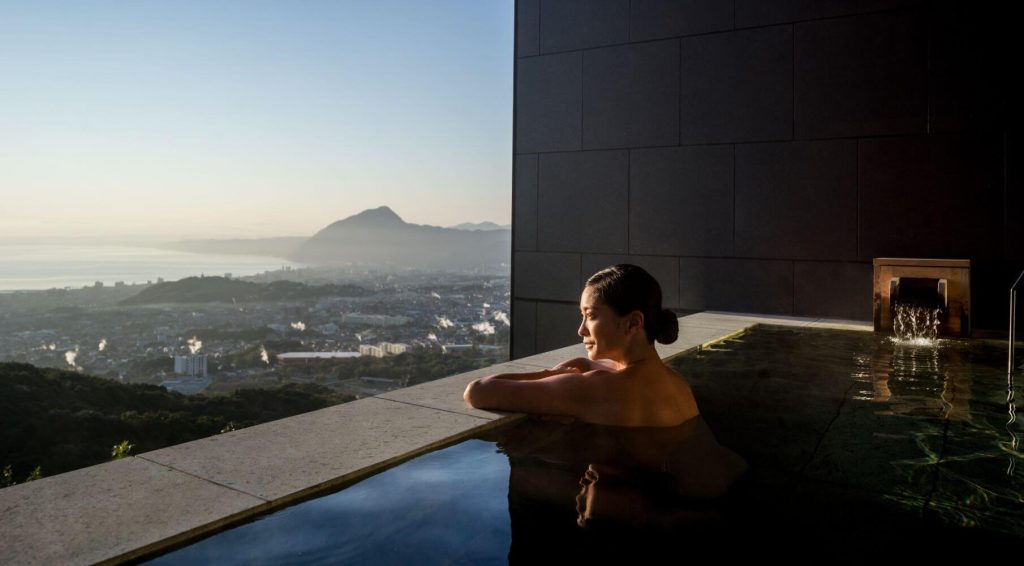
From the cliffside infinity pool, you overlook Beppu Bay and the steam rising from the city. Michelin Key 2024.
3. Beppu Showaen
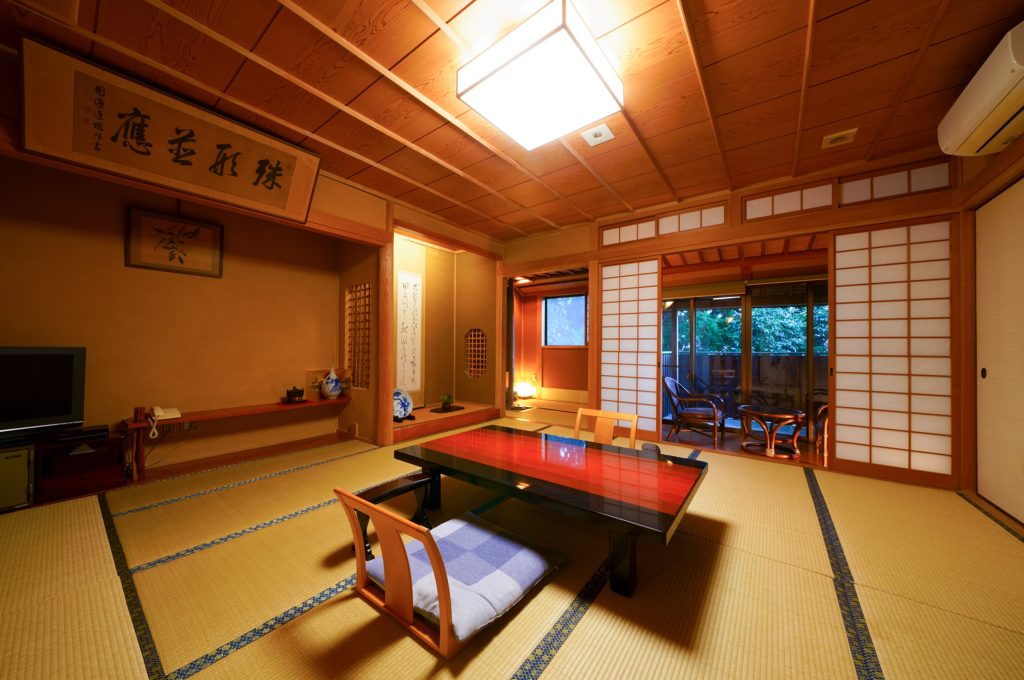
Founded in 1926. Eleven detached cottages across roughly 20,000 m² (about 5 acres) of grounds, each with an open-air bath or a hinoki cypress bath. Complete privacy, and Beppu’s hot springs all to yourself.
Staying in Yufuin
4. Kamenoi Bessou
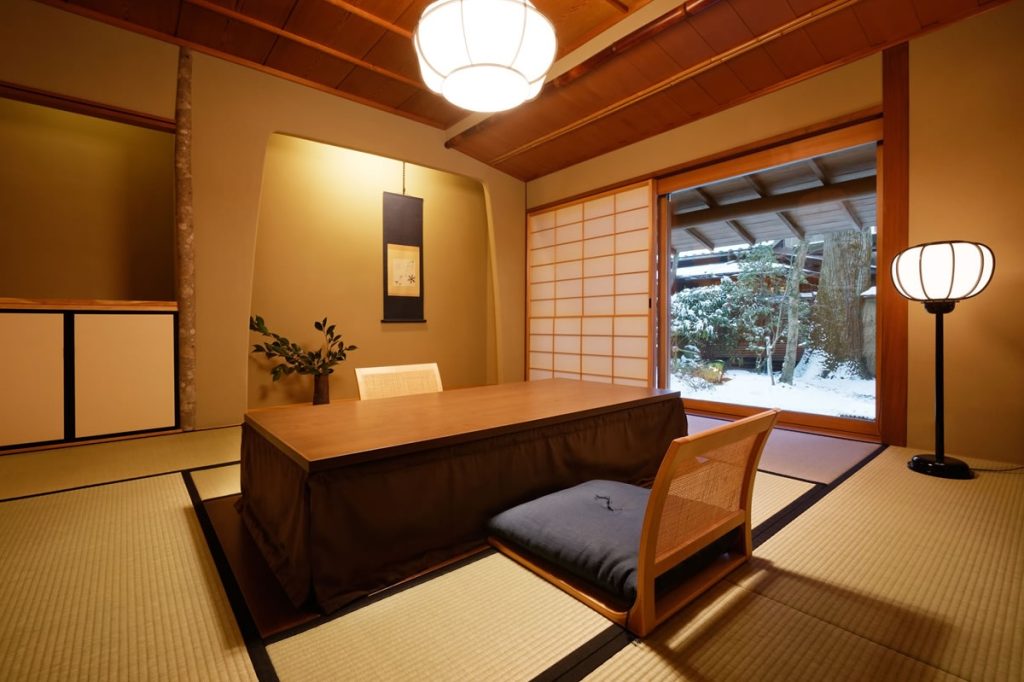
Villa-style cottages, open since 1921. Five minutes on foot from Lake Kinrin — close enough to walk to the lake in the morning fog at 6:30 AM. Michelin Key 2024.
5. Yufuin Tamanoyu
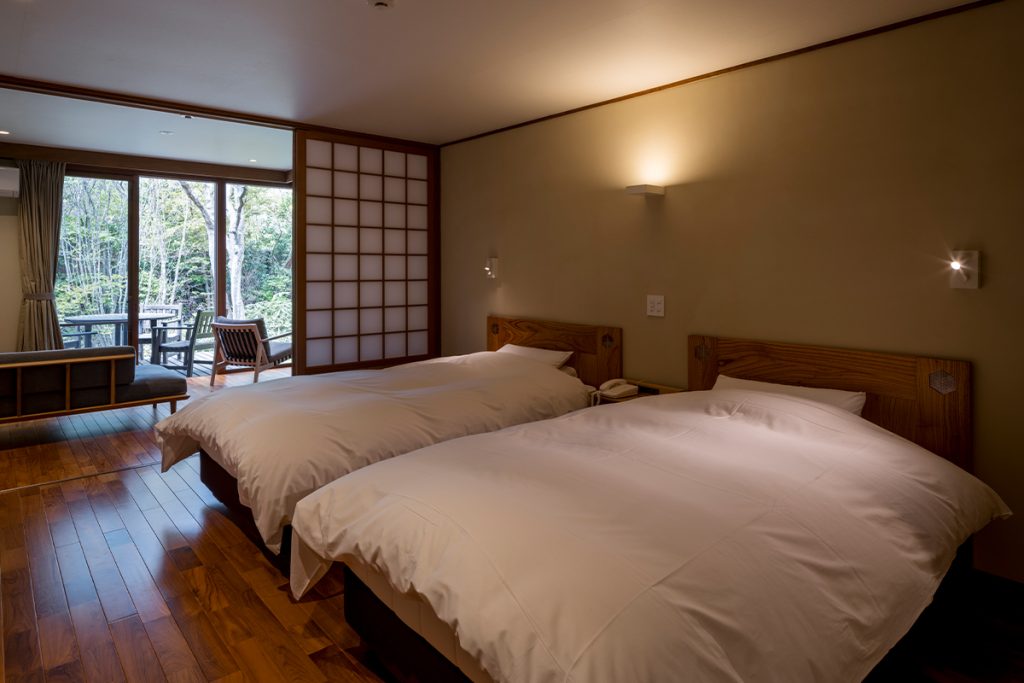
Began in 1953 as a retreat run by a Zen temple, and is now one of the inns that define Yufuin. Fifteen guest buildings scattered through woodland, in a quiet that makes the crowds on Yunotsubo Street hard to believe.
6. Sansou Murata
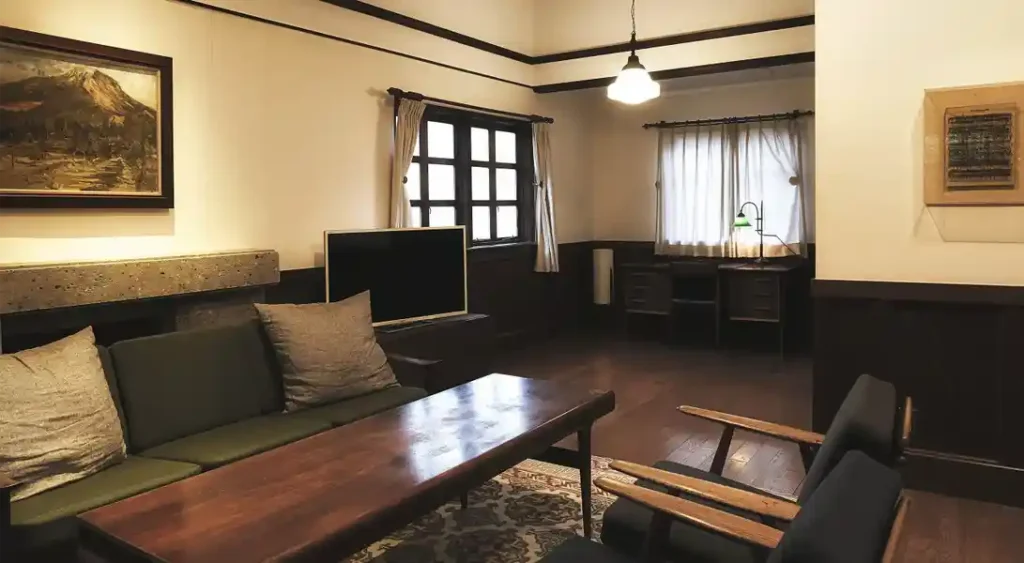
Open since 1992. Twelve detached buildings on high ground a little away from central Yufuin, including rooms rebuilt from traditional houses over 100 years old. One of Yufuin’s “big three” alongside Kamenoi Bessou and Tamanoyu, known for its quiet and its craft-inspired design.
Each property can be booked through its own website and through major booking sites including Booking.com and Agoda (availability varies by property).
How many nights? Two to four nights is a good range if you want to take your time in both towns. For example, two nights in Beppu for the hells, a sand bath, bathing in different types of hot springs and jigoku-mushi, then one night in Yufuin for the morning fog, the art and the quiet.
Getting There — Closer to Tokyo Than You’d Think

- From Tokyo: About 1.5 hours by air from Haneda to Oita Airport, with several flights a day. From the airport, the airport shuttle takes about 45 minutes to Beppu and about 55 minutes to Yufuin.
- From Osaka: The overnight Sunflower ferry runs direct to Beppu Port. One night on board, and you wake up in the onsen town.
- Hakata to Beppu: About 2 hours on the Sonic limited express, running every 30 to 60 minutes. The most reliable option in winter. Our Fukuoka to Beppu access guide has the full route details.
- Hakata to Yufuin: About 2 hours 20 minutes on the Yufuin no Mori sightseeing limited express. All seats reserved; booking required. In December and January, reserve at least a week ahead. If it’s full, local trains plus a bus still get you to Yufuin in about 2.5 hours, so your trip stays on track.
Beppu ↔ Yufuin: The 30 Minutes Between Them Is Part of the Trip
- By car or taxi: About 30 minutes. Stop at the Sagiridai lookout, which takes in the whole Yufuin basin and Mount Yufu, and you get to see the town you are heading for from above before descending into the basin.
- By bus: No reservation needed for the two regular services below — just decide on the day and get on. The views as you pass through Kijima Kogen and the lower slopes of Mount Yufu turn the ride between the two onsen towns into a small piece of sightseeing. The fare is ¥1,100 (~US$8).
- Yufurin: A sightseeing rapid bus linking Beppu and Yufuin in about an hour. Board at Beppu Kitahama stop 1.
- Local route bus: Kamenoi Bus route 36 (Yufuin Line) connects Beppu Station West Exit and Yufuin Station Bus Center in about 50 minutes, with roughly 19 services a day from around 7:00 AM until evening.
Beppu to Yufuin by Open-Top Bus: KAMENOI OPEN TOP BUS “Yunokaze” (October 7 – December 13, 2026)
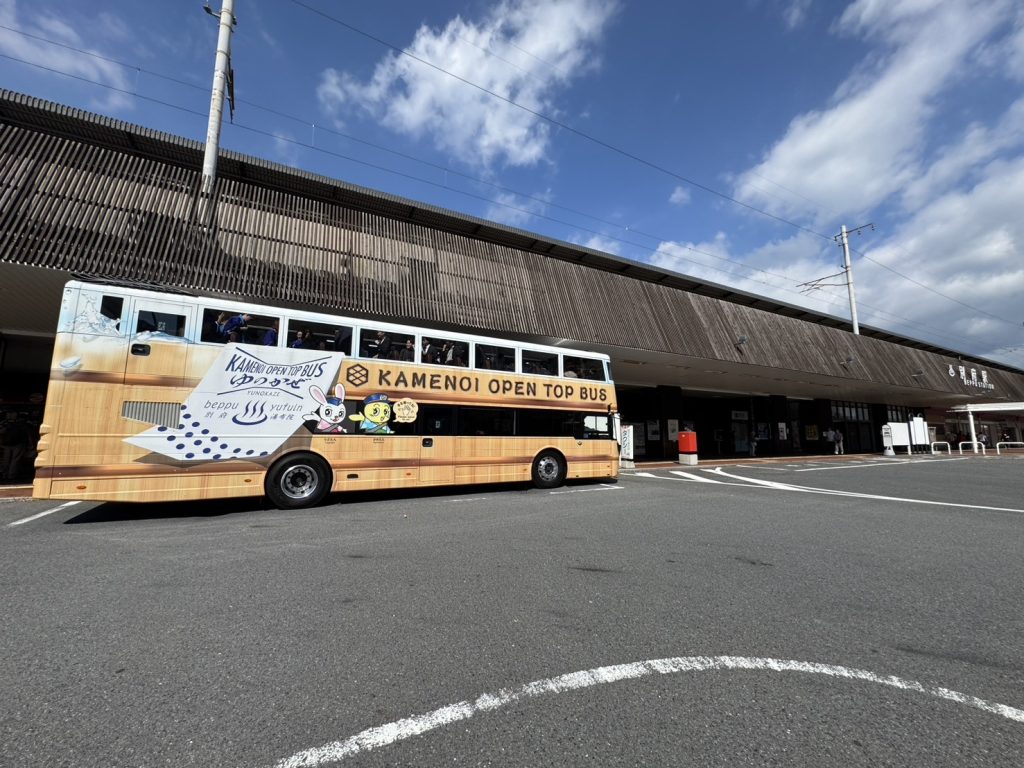
The KAMENOI OPEN TOP BUS “Yunokaze,” operated by Kamenoi Bus, is an open-top double-decker wrapped in a design inspired by a traditional wooden onsen bucket. It connects Beppu Station (stop 4) and Yufuin Station Bus Center in about 65 minutes, with three departures a day in each direction (six in total). You can enjoy panoramic views of the Kankaiji and Horita onsen areas, the view from the Sagiridai lookout, and Mount Yufu, known as the “Bungo Fuji.” Each departure is limited to 46 seats, so don’t forget to book before you travel. Tickets cost ¥2,000 (~US$14) online at highwaybus.com (English site; search “KAMENOI OPEN TOP BUS” and pay by card), or ¥2,200 (~US$16) at the WANDER COMPASS BEPPU counter near Beppu Station or at Yufuin Station Bus Center. Dress warmly! The wind blows right through the upper deck — and that’s exactly what makes this ride special. Check the official site for departure times and non-operating days.
Not Sure? Ask Someone Who Lives Here

Which inn, what order, how to get between them. The right answer changes with the season, with how you like to travel, and with the kind of hot spring you prefer. So instead of a generic answer from a search engine or an AI, why not ask someone who knows Beppu today?
WANDER COMPASS BEPPU, the tourist information center at Beppu Station, runs an Online Travel Chat: a one-to-one video call with local staff who can help you build an itinerary around your plans. Available in English. The service normally carries a fee, but for a limited period it is free — for anyone who books a session by the end of March 2027.
Related Articles
Beppu tattoo-friendly onsen guide / Fukuoka to Beppu access guide / Beppu Hells (Jigoku Meguri) guide / Jigoku-mushi food guide