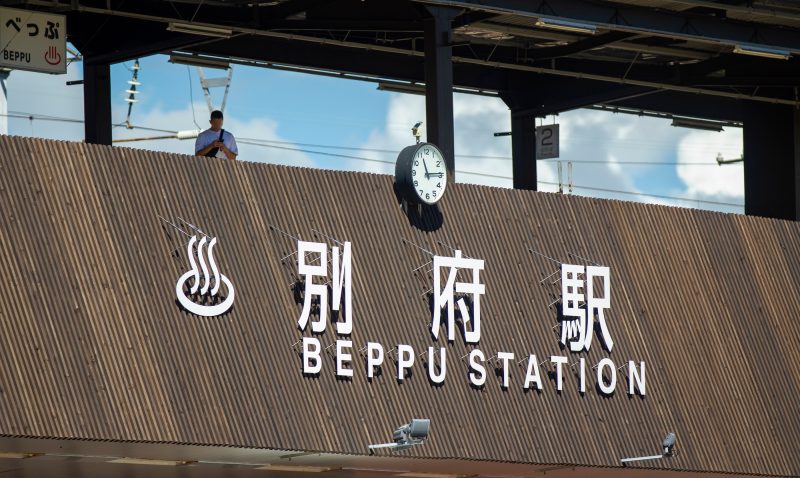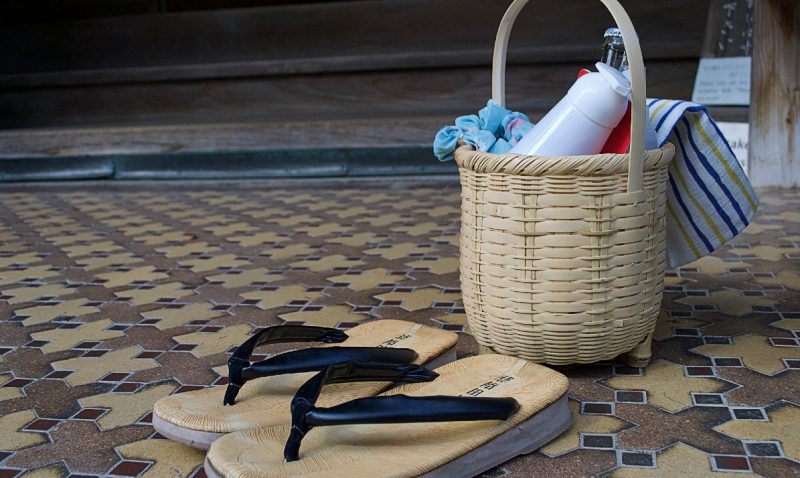
Beppu is made up of eight hot spring areas rather than a single onsen town. They stretch from the bay up into the hills, each with its own water and its own pace. Most visitors stay one or two nights, and every area in this guide is within 30 minutes by bus from Beppu Station. Pick the area first, then decide where to stay. Below are the five bases and the accommodations we’ve featured in each.
Choose Your Area First: Beppu’s Onsen Districts at a Glance
Beppu is made up of eight historic onsen districts, known together as Beppu Hatto: Hamawaki, Beppu, Kamegawa, Kannawa, Kankaiji, Horita, Shibaseki and Myoban. Each developed around its own hot springs, so the water, the streets and the mood change as you climb from the bay to the hills.
For choosing where to stay, the eight districts can be grouped into five practical bases:
| Area | What it feels like | From Beppu Station |
|---|---|---|
| Beppu Station & Kitahama | Downtown, traditional public bathhouses, bars | Walk |
| Kannawa | Steam, the Hells, ryokan | About 15–30 min by bus |
| Myoban | Sulfur, mountain air, quiet | 25–27 min by bus |
| Kankaiji & Horita | Hillside resorts, bay views | 8–14 min by bus |
| Shonin-ga-hama (seaside) | Beachfront resorts, sea views | About 15 min by bus |
Bus times are from the Kamenoi Bus weekday timetable (March 2026).
Quick Picks
- No car, one night, arriving by train: Beppu Station area. You can walk from the station to a bathhouse.
- Arriving by highway bus from Fukuoka: buses stop at Kitahama, a 2-minute ride or short walk from the station area.
- Two nights: split them. One night downtown, one in Kannawa or the hills.
- Traveling with kids: a large hillside resort such as Suginoi Hotel, with large communal baths and a buffet dinner, is the easiest choice.
- With a car: the hills and Myoban open up. Parking is simpler there than downtown.
Five Areas to Base Yourself
For each area: how to get there, how steep it is with luggage, what you can walk to, and the downside nobody mentions on the booking page.
Beppu Station & Kitahama: Easy Arrivals, Traditional Public Bathhouses

This is old-school Beppu: narrow lanes lit by izakaya neon, and public baths that open early for locals. Takegawara Onsen, a wooden bathhouse with a sand bath, is about a 10-minute walk from the station’s East Exit.
- Getting here: step out of the station and you’re here. Kitahama, where highway buses stop, is along the main street from the station toward the sea.
- Slopes and luggage: flat. It’s the easiest area to get around with a suitcase.
- Walk to: Takegawara Onsen and small public baths nearby.
- Photo spot: Takegawara Onsen’s wooden karahafu roof, which looks its best in the evening.
- Best for: first-timers, one-night stays, travelers without a car. You can try a sand bath here, too.
- Downside: you won’t see steam from your window.
Stays we’ve featured:
Amanek Beppu Yula-re: a modern hotel by the station with a rooftop onsen.
Yamada Besso: a retro 1930s onsen villa in Kitahama with a private open-air bath.
Tenku-Yubo Seikaiso: a Kitahama inn with a private open-air bath that looks out over the bay.
Hotel Shiragiku: a long-established onsen hotel with a Japanese garden, two minutes by bus from the West Exit.
Kannawa: Steam, the Hells and Onsen-Cooked Food
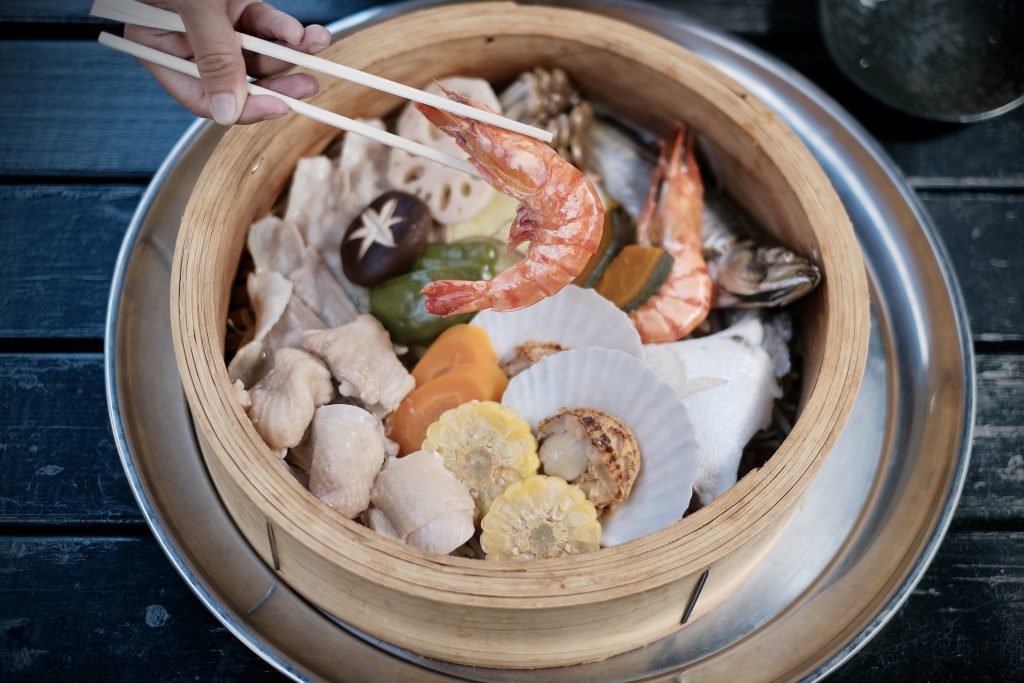
Kannawa is the Beppu on the posters. Steam pours out of the ground between houses, the streets smell faintly of minerals, and the Hells are on your doorstep. These jigoku are boiling hot spring pools you look at but don’t bathe in, and touring seven very different ones, known as the Jigoku Meguri (Hell Tour), is Beppu’s classic sightseeing route.
- Getting here: buses 5 and 41 from the station’s West Exit (platform 3) reach Kannawa in 16–17 minutes. Bus 2 takes 26–28 minutes. The last buses leave after 11:00 PM on weekdays but in the 9 PM hour on weekends and holidays. Highway buses from Fukuoka also stop at Kannawa-guchi, so you can ride straight in without changing.
- Slopes and luggage: gentle slopes and narrow lanes. Fine on foot, but taxis drop you closer than the bus.
- Walk to: the Hells, Kannawa Mushiyu steam bath, jigoku-mushi steam-cooking shops.
- Photo spot: the Yukemuri Observatory above town, looking down on dozens of steam plumes. Go on a cold morning, when the steam is thickest.
- Best for: a second night, food lovers, anyone who wants to wander in a yukata after dinner.
- Downside: the Hells bring tour buses by day, and few shops stay open late. Kannawa is for early nights.
Stays we’ve featured:
Sally Garden Inn Yanagiya: an old toji inn where guests can steam their own food in the jigoku-gama. Only some of its buildings allow children to stay, so ask when you book.
Zekkei no Yado Sakuratei: an inn in upper Kannawa with a private family bath and jigoku-mushi in its kaiseki dinner.
Hiromiya Toji Stay: a family-run toji inn, open since 1960, with staff who speak Japanese and English.
Myoban: Sulfur Huts and Mountain Quiet
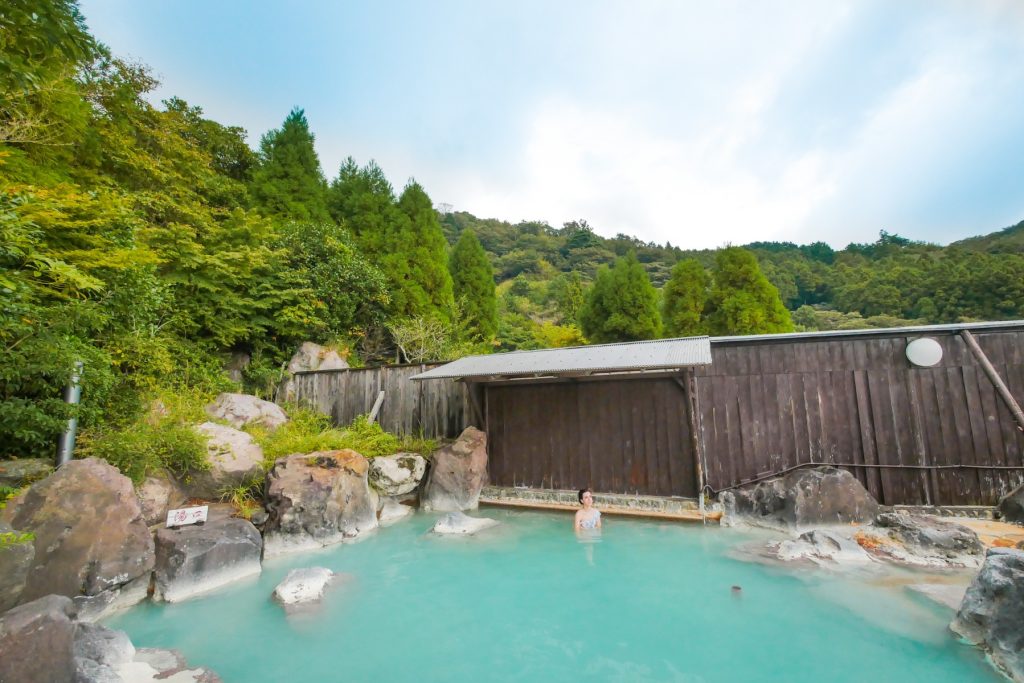
Myoban sits higher up the mountain than Kannawa, about 10 minutes further by bus. The air smells of sulfur, and thatched huts on the slope are still used to make yunohana, the mineral flakes sold as bath salts. The method is listed as an Important Intangible Folk Cultural Property of Japan.
- Getting here: buses 5 and 41 from the West Exit take 25–27 minutes. The last bus 5 leaves at 10:30 PM on weekdays and 9:50 PM on weekends and holidays.
- Slopes and luggage: steep. Get off at the Myoban stop; some inns are uphill from there.
- Walk to: the yunohana huts, milky-blue sulfur baths.
- Photo spot: the rows of yunohana huts with steam leaking through the thatch.
- Best for: couples, repeat visitors, anyone who wants a mountain onsen without driving far.
- Downside: few shops or restaurants. Eat at your inn.
Stays we’ve featured:
Okamotoya: a ryokan open since 1875, with milky-blue sulfur water and views of Beppu from the rooms.
Yuya Ebisu: the bathhouse of Oyado Ebisuya. Guests can use its large communal bath and private open-air baths at no extra charge.
ANA InterContinental Beppu Resort & Spa: a luxury resort on the slopes between Kannawa and Myoban, with a private bath and Club rooms with open-air baths on the terrace. It’s about 20 minutes by taxi from the station, and the hotel runs a free shuttle (book ahead at weekends).
Kankaiji & Horita: Hillside Resorts Over the Bay
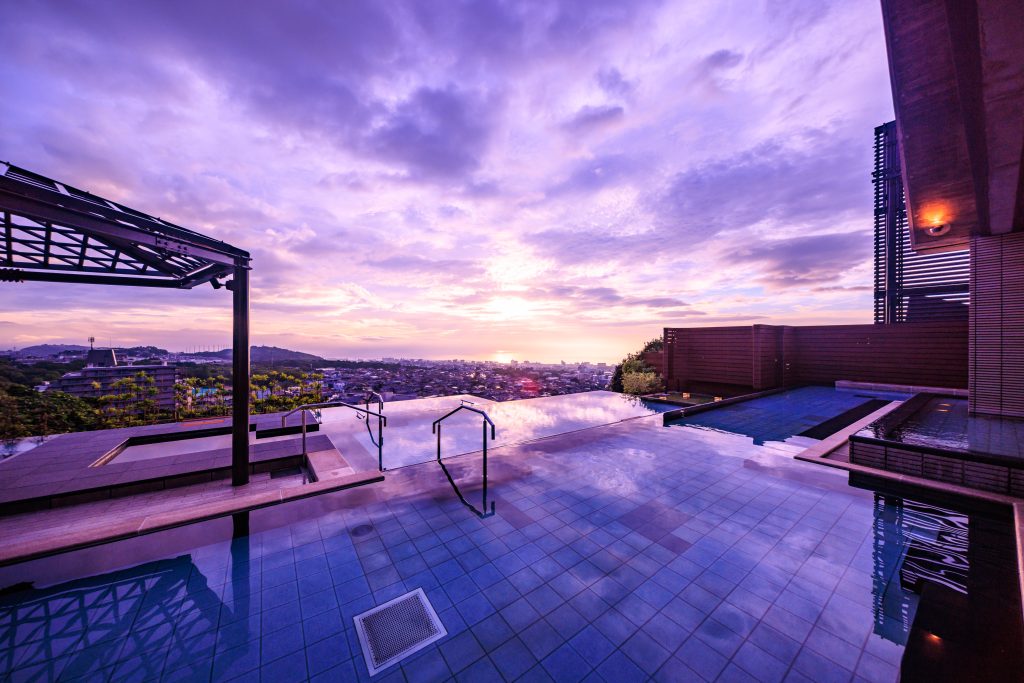
The hills above downtown are where Beppu’s big resort hotels look out over the city and the sea. Kankaiji is mainly a resort hotel area; Horita, a little further up, is a quieter residential area with onsen.
- Getting here: bus 36 (the Yufuin line) from the West Exit (platform 1) reaches the Kankaiji-iriguchi stop in 8–9 minutes and the Horita Onsen-mae stop in 13–14 minutes. The last bus leaves at 6:20 PM on weekdays and weekends. Suginoi Hotel’s free shuttle leaves from the West Exit (Hotel Fujiyoshi car park) and runs until 6:40 PM on weekdays and 8:40 PM on weekends and holidays, later than the public bus.
- Slopes and luggage: very steep. Plan on a taxi, a hotel shuttle or a car.
- Walk to: mainly your hotel’s own baths. Horita Onsen is right in front of the Horita Onsen-mae stop.
- Photo spot: Beppu Bay and the city lights from your room or the open-air bath.
- Best for: families, view seekers, anyone with a car.
- Downside: getting around at night is difficult without a taxi. Downtown dinner means a ride back up.
Stays we’ve featured:
Suginoi Hotel: a large resort with terraced open-air baths and kids’ facilities.
Ryochiku Bettei: a quieter inn in Kankaiji with a private bath.
Grandpia Resort Ogiyama: on high ground near the Beppu IC exit, a good pick for drivers. Every room has its own onsen bath.
Shonin-ga-hama: Onsen by the Sea

Shonin-ga-hama is a stretch of beach along Beppu Bay, a short ride from downtown. The resorts here have baths right by the sea, so you can soak to the sound of the waves.
- Getting here: bus 26 from the Beppu Ekimae stop (platform 5) reaches Shonin-ga-hama Koen-mae in about 15 minutes. The last bus leaves at 7:00 PM on weekdays and 6:53 PM on weekends and holidays.
- Slopes and luggage: flat, but spread out. A taxi is easiest with bags.
- Walk to: the beach promenade and SHONIN PARK, home of a modern sand bath.
- Photo spot: the bay from an open-air bath that sits almost at sea level.
- Best for: couples, special occasions, anyone who wants the sea rather than steam.
- Downside: little to walk to after dark. Plan to eat at your hotel.
Stays we’ve featured:
Amane Resort Seikai: every room has an open-air bath facing the sea.
AMANE RESORT GAHAMA: a beachfront resort where every room has its own onsen bath.
Ryokan, Hotel or Guesthouse? What Each Stay Is Like
Beppu’s accommodations come in four main types, and each offers a different experience.
| Type | What to expect | Good for |
|---|---|---|
| Ryokan | Tatami rooms (some inns offer Japanese-Western rooms), dinner and breakfast included | First-time onsen visitors |
| Onsen hotel | Western-style beds, large communal baths, buffets | Families, short stays |
| Toji inn | Simple rooms, self-catering with a jigoku-gama (steam-cooking pot) | Longer stays, budget-conscious travelers |
| Guesthouse / minshuku | Shared spaces, local hosts | Solo travellers |
Ryokan: Dinner Included, Timing Matters
Most ryokan offer rooms with dinner and breakfast included (ippaku nishoku). Dinner is a set multi-course meal served at a fixed time in the early evening. If your train is delayed, call the inn, because many can’t hold dinner for long. In a Japanese-style room, you’ll usually sleep on a futon laid out on tatami (woven-rush floor mats). If you’d rather sleep in a bed, some inns offer Japanese-Western rooms (wayoshitsu) that combine tatami with beds, so check the room types when you book. You can wear the inn’s yukata to the bath and to dinner.
Onsen Hotels: The Easy Choice With Kids
Large hotels have beds, elevators, large communal baths and buffet dinners, so nobody has to sit through a long multi-course meal. They’re the easiest choice for families and the most likely to have English-speaking staff.
Toji Inns: Cook Your Own Dinner in the Steam
Toji means staying at an onsen to rest and heal. Beppu’s toji inns have kept that tradition alive with the jigoku-gama, a steam cooker fed straight from the hot spring. Guests use it to steam their own vegetables, eggs and seafood. At Sally Garden Inn Yanagiya, the jigoku-gama and kitchen are free for guests to use, and at Kamioka Onsen Hozanso guests can bring their own food to steam. It’s the most local way to stay in Beppu, and often the most affordable.
Guesthouses and Minshuku
Smaller guesthouses and family-run minshuku offer simple rooms, shared bathrooms and a host who knows the local public baths well. Many don’t serve dinner, which leaves you free to eat out. In Kannawa, Hiromiya Toji Stay is a family-run example with English-speaking staff.
Onsen at Your Stay: Private Baths, Tattoos and Day Visits
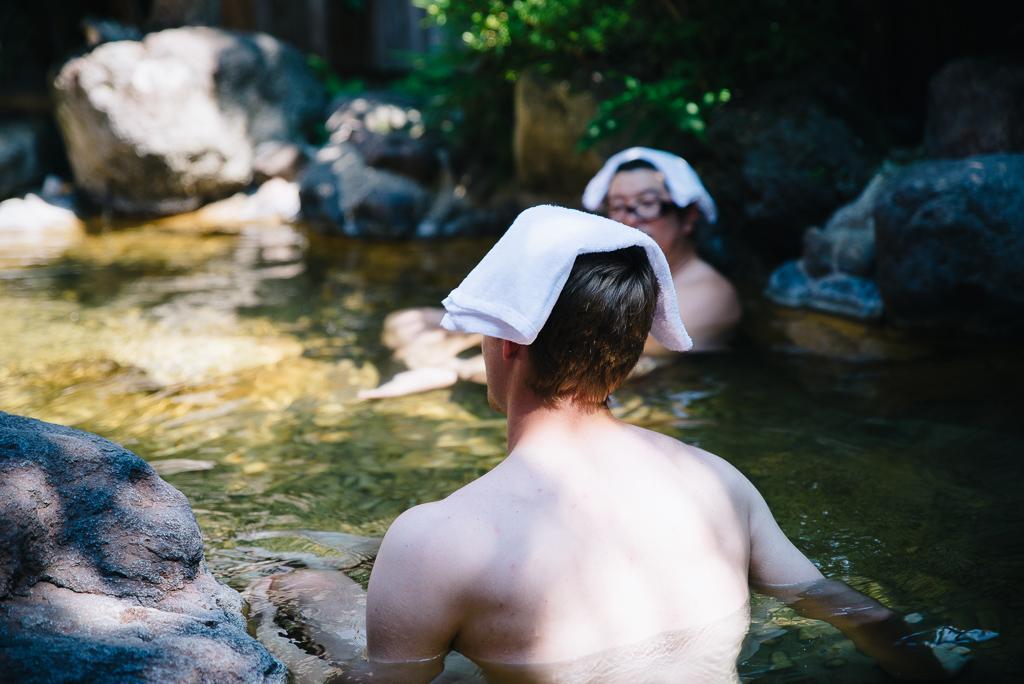
The bath at your inn shapes the whole stay, so check these three things before you book.
Private Baths and In-Room Baths
Many inns in Beppu have a kashikiri bath, a private bath you reserve for your group. Some inns include it for free, while others charge an extra fee. Some higher-end rooms also come with an open-air bath on the balcony. If you’ve never bathed with strangers, either option lets you try onsen on your own terms. Our guides to private onsen in Beppu and ryokan with private onsen list more options.
If You Have Tattoos
Policies vary from inn to inn, and the large communal baths and private baths often have different rules. A room with its own bath or a reservable kashikiri bath usually solves the problem. Ask the inn before you book. For public baths, see our tattoo-friendly onsen map.
Use the Baths Nearby, Too
Don’t limit yourself to the baths at your inn. Try some of the nearby onsen, too. Downtown and Kannawa are full of small public bathhouses that open early, and many inns welcome day visitors to their baths. New to onsen? Read our step-by-step onsen manners before your first soak.
Booking and Practical Tips
Here are a few things that can trip up first-time visitors to Beppu.
When to Book
Book early for Japanese holiday periods: Golden Week (late April to early May), mid-August and New Year. Weekends fill faster than weekdays all year.
If Your First-Choice Area Is Full
Stay downtown and visit the other areas during the day. Buses from Beppu Station reach Kannawa in about 15–30 minutes, and many inns in Kannawa and Myoban open their baths to day visitors.
The Onsen Tax
Beppu charges a small onsen tax (nyuto-zei) per person, per day. Your inn collects it together with your room charge. Children under 12 are exempt.
Getting Around at Night
Buses to Kannawa and Myoban run until about 10:30–11:00 PM on weekdays, but on weekends and holidays, the last buses leave in the 9 PM hour. Always check the Kamenoi Bus timetable for your day. Taxis are easiest to find at Beppu Station.
Luggage and Cash
Inns in the hills and in Myoban are hard to reach on foot with a suitcase, so take a taxi from the station. Small inns and bathhouses may be cash only, so carry yen.
For trains and highway buses to Beppu, see our getting to Beppu and Fukuoka to Beppu guide.
Beppu or Yufuin as Your Base?
Yufuin is about an hour from Beppu Station on bus 36, and many travelers visit both on the same trip. Stay in Beppu for variety: eight onsen districts, the Hells and local dishes cooked in onsen steam. Stay in Yufuin for a slower pace and a countryside stay. With two nights, the simplest plan is one in each. See Beppu and Yufuin in winter for a side-by-side look.
FAQ
What is the best area to stay in Beppu for first-timers?
Stay near Beppu Station if you’re arriving by train and staying one night. You can walk to Takegawara Onsen and catch buses to other areas. If you want the steam-filled streets of the postcards, choose Kannawa instead. It’s about 15–30 minutes from the station by bus and puts the Hells within walking distance.
Is it better to stay in Kannawa or near Beppu Station?
Kannawa is better for atmosphere: steam vents, the Hells and places serving onsen-steamed food outside your door. The station area is better for convenience, with flat streets, trains, highway buses and more places to eat late. Many visitors with two nights split them, sleeping one night in each area. The two areas are about 15–30 minutes apart by bus, so moving between them is easy.
Can I use the onsen in Beppu if I have tattoos?
Policies differ from inn to inn. A room with its own open-air bath or a private bath lets you soak without worrying about the rules for large communal baths. Always ask the inn before you book, and check our tattoo-friendly onsen map for public baths. Rules for large communal baths and private baths are often different, so ask about both.
Do ryokan in Beppu include dinner?
Most ryokan include dinner and breakfast in the room rate. Dinner is a set course served at a fixed time in the early evening, so tell the inn if you’ll arrive late. Room-only plans are also common, and toji inns let you cook your own food in a steam cooker.
What is the onsen tax in Beppu?
Beppu’s onsen tax (nyuto-zei) is a small charge per person, per day. Your inn adds it to the bill. The amount depends on the room rate, and it doesn’t apply to children under 12 or to public bathhouses. For stays of seven nights or longer, the rate is halved from the first night, which makes longer toji stays more affordable.
Do I need a car to stay in Kannawa or Myoban?
No. Buses run from Beppu Station to Kannawa in about 15–30 minutes and to Myoban in 25–27 minutes. They run until about 10:30 PM on weekdays (after 11 PM to Kannawa) and the 9 PM hour on weekends and holidays. For the hillside resorts in Kankaiji and Horita, the last bus leaves at 6:20 PM every day, so plan on a taxi, hotel shuttle or car.